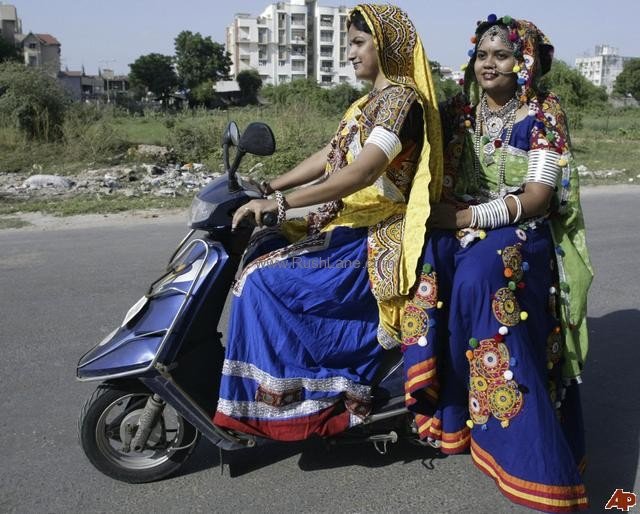
 हम अक्सर कारों से देश को नापने लगता हैं . परन्तु एक करोड़ से ज्यादा दो पहिये वाहन हर साल देश मैं बन रहें हैं . भारत विश्व का सबसे बड़ा दो पहियों की गाड़ियों का बाज़ार बन गया है. दे श के विकास का यह एक नया आयाम है की अब दूधवाले मोटर साइकिल पर आते हैं . कभी यह स्वपन था की बाइयां अब नानो कार मैं आएँगी . वह दिन शायद दस साल बाद आये पर आयेगा . डिजाइनव् रिसर्च मैं हम पीछे हैं .अधिकाँश सम्मान विदेशी तकनीक से उत्पादित होता है. टाटा ने एक बीड़ा उठाया था पर हम विदेशी कंपनियों के आगे टिक नहीं पाये . आशा है कोई और रतन टाटा देश को स्वाबलंबी बना देगा .
इस सुशिल राजपूत के लेख को लिंक पर क्लिक कर पढ़ें.
Indian Two Wheeler Industry:A Constant Growth Continues
Assignment: International Marketing Management
Name : Sushil Rajput
Roll No. 59 HS Code: 871120 ( Motorcycle: 50 cc to 250 cc) Submitted to : Dr. Gautam Dutta, Professor, IIFT
Course: Certificate Programme in Export Management (CPEM) Institute: Indian Institute of Foreign Trade (IIFT), New Delhi
Content
| Sr. no. | Description | Page No. |
| 1 | Global Two Wheeler Industry Market | 3 |
| 2 | Indian Two Wheeler Industry | 4 |
| 3 | Production & Consumption Pattern : Domestic | 8 |
| 4 | Future Forecast of Domestic Demand: 2013 – 17 | 9 |
| 5 | Top 5 Exporting Countries from India | 9 |
| 6 | Top 5 Importing Countries to India | 10 |
| 7 | Revealed Comparative Advantage (RCA) | 11 |
| 8 | Identification of Explore and Unexplored Market: Top 20 | 12 |
| Markets | ||
| 9 | Tariff Barrier and India’s Position in Selected Markets | 13 |
| 10 | Trade Intensity Index (TII) of 15 Top Markets | 14 |
| 11 | Cultural Insight of Top 15 Markets | 15 |
| 12 | Economy Ranking/Status of Top 15 Markets | 16 |
| 13 | Overview of ICRA Study on Two Wheeler exports | 17 |
| 14 | Conclusion | 19 |
| 15 | Bibliography | 20 |
2
Global Two Wheeler Industry Market
Global motorcycles, scooters and mopeds market measured in volume terms is undoubtedly going Asia’s way, with a massive chunk of the total market concentrated in the Asia-Pacific region. Developing nations in Asia and Latin America, which perceive two-wheelers as a basic mode of transportation, are expected to remain the most promising markets for scooters, light motorcycles and mopeds. The last two decades have comprehensively transformed the powered two-wheeler industry worldwide. Demand has often outgrown expectations, beating the industry’s calculation, with changing market pattern being the accepted norm. Regional markets play a significant role in market evolution, wherein the wave of consumerism across the globe overhauled the structure of the powered two-wheeler industry worldwide. Motorcycles and scooters emerged favorites with the male customers, while mopeds and small scooters found ready acceptance with the female customers.
In developed countries like the US, Canada, Japan, Germany and Italy, motorbikes and scooters are considered a premium purchase to be enjoyed by the wealthy and riding enthusiasts. In contrast, developing markets such as China, India and other South East Asia view motorcycles, scooters and mopeds as essential modes of transportation. The Chinese motorcycle industry has emerged as a formidable force in the global motorcycle and scooters market. The region’s emerging leadership has ignited a fierce competition, threatening to erode the monopoly hitherto enjoyed by the Japanese majors. Price competitiveness, vis-à-vis power, quality and comfort are key differentials in today’s motorcycle and scooter industry. Replacement sales as well as components and accessories demand remains a major factor driving the two- wheeler market. Economic growth and rapid urbanization levels also propel sales in the two-wheelers market. Fuel efficiency/mileage, emission levels, design & style, demographics, transportation system and engine power are some of the other critical growth motivators. In addition, regulatory environment and government policy play an important role in determining the future direction of the industry.
The Motorcycles segment comprises the largest and most popular category, accounting for a major share of the global two-wheelers industry. Demand for motorcycles far exceeds that of scooters and mopeds, the trend reflecting the highest compounded growth rate anticipated for the segment.
The global market for motorcycles, scooters & mopeds is highly fragmented, with the players making continuous marketing efforts to sustain market shares and broaden their customer base. Global players include Bajaj Auto Limited, BMW Group, China Jialing Industrial Co. Ltd., Chongqing Lifan Hongda Industry, Ducati Motor Holding SpA, Harley-Davidson, Inc., Hero Honda Motors Limited, Honda Motor Co., Ltd, Honda Italia Industriale S.p.A., Honda Motorcycle & Scooter India (Private) Ltd., S&T Motors Co. Ltd., Kawasaki Heavy Industries Ltd., Piaggio, Suzuki Motor Corporation, Triumph Motorcycle Limited, Yamaha Motor, MBK Industrie SA and Yamaha Motor India Private Limited.
3
Indian Two Wheeler Industry
The two wheeler industry has been in the country since 1955. It generally consists of three segments Mopeds, Motorcycles and Scooters. Two wheelers have played a pivotal role in the rising growth of the Indian automobile industry. Over the years the domestics sales of two wheelers have grown by huge margins.
The two wheeler market has witnessed a sea change over the years. In the past Indians preferred scooters and mopeds but with the rising income levels and standard of living there is a remarkable rise in the demand for motorcycles which along with serving the purpose of a vehicle has become a style statement for the youth of the country.
The Indian two-wheeler (2W) industry has shown a strong volume growth over the last two-years, having grown by 25% in 2009-10 and 27% in 2010-111 to reach 13.3 million units. This strong double-digit growth has been driven by multiple factors. One reason, of course, is statistical as this period of high double-digit growth has showed up after a rather sedate previous two years, when the 2W industry volumes had shrunk by 5% in 2007-08 and had grown by a mere 5% in 2008-09. In addition to the contribution of pent-up demand, the 2W industry growth over the last two years has been supported strongly by various underlying factors including India’s rising per capita GDP, increasing rural demand, growing urbanization, swelling replacement demand, increasing proportion of cash sales and the less measurable metric of improved consumer sentiment.
Major Two Wheeler Manufacturers in India are :
Hero Motocorp: Hero Motocorp., formerly Hero Honda, is an Indian motorcycle and scooter manufacturer based in New Delhi, India. Hero Honda started in 1984 as a joint venture between Hero Cycles of India and Honda of Japan. The company is the largest two wheeler manufacturer in India. The 2006 Forbes 200 Most Respected companies list has Hero Honda Motors ranked at #108.
In 2010, when Honda decided to move out of the joint venture, Hero Group bought the shares held by Honda. Subsequently, in August 2011 the company was renamed Hero MotoCorp with a new corporate identity. On June 4, 2012, Hero Motocorp approved a proposal to merge the investment arm of its parent Hero Investment Pvt. Ltd. into the automaker. The decision comes after 18 months of its split from Honda Motors.
In 2001, the company achieved the coveted position of being the largest two- wheeler manufacturing company in India and also, the ‘World No.1’ two-wheeler company in terms of unit volume sales in a calendar year. Hero MotoCorp Ltd. continues to maintain this position till date.
4
Hero MotoCorp two wheelers are manufactured across three globally benchmarked manufacturing facilities. Two of these are based at Gurgaon and Dharuhera which are located in the state of Haryana in northern India. The third and the latest manufacturing plant is based at Haridwar, in the hill state of Uttrakhand.
Splendors, Passion, Karzima, CBZ, are one of the well known models in India.
Bajaj Auto: Bajaj Auto is the largest exporter of two and three wheelers in India. In collaboration with Kawasaki Heavy Industries of Japan Bajaj Auto Ltd manufactures a wide range of two wheelers which are the best in the industry.
Bajaj Auto is the world’s third-largest manufacturer of motorcycles and the second- largest in India.
The Forbes Global 2000 list for the year 2005 ranked Bajaj Auto at 1,946. It features at 1639 in Forbes 2011 list.
The company has changed its image from a scooter manufacturer to a two-wheeler manufacturer. Its product range encompasses, scooters and motorcycles. Its growth has come in the last four years after successful introduction of models in the motorcycle segment.
This company has introduced certain models like Pulsar, Discover DTSi and Kawasaki Bajaj Eliminator which has given other two wheeler manufacturing companies a run for their money.
TVS Motor Company: TVS Motor Company is the third largest two wheeler manufacturer in India and among the top ten in the world. In its wide range of products TVS offers a two wheelers for everyone right from mopeds to racing bikes. It has a range of products for women as well like the TVS Wego, Scooty Streak, Scooty Pep+, Scooty Teenz and among its most famous road dominators are: TVS Apache RTR 180 and TVS Flame DS 125. TVS Motor will have profitable operations overseas especially in Asian markets, capitalizing on the expertise developed in the areas of manufacturing, technology and marketing. The thrust will be to achieve a significant share for international business in the total turnover.
Suzuki Bikes and Scooters: Suzuki Motorcycle India Pvt. Ltd. is a subsidiary of Suzuki Motor Corporation, Japan where in we are having the same manufacturing philosophy of value packed products right from the inception. SMIPL will be manufacturing two wheelers best suited for the valuable Indian customers covering all segments. Suzuki motors first entered India in collaboration with TVS Motors. Suzuki motors ruled the two wheeler market for quite a long time until competitors started flooding in. Some of the most famous and stylish two wheelers by Suzuki are Suzuki Samurai, Suzuki Shogun and Suzuki Max 100.
5
Suzuki installed manufacturing plant in Gurgaon (Haryana) having the annual capacity of 4,70,000 units. Total land area of the facility at Gurgaon is 37 acres out of which the present plant is constructed in an area of 6.5 acres of land. The remaining area of 30.5 acres is left for land development and future expansion.
Honda Motorcycles & Scooters India: Honda is the world’s largest manufacturer of 2-wheelers. Its symbol, the Wings, represents the company’s unwavering dedication in achieving goals that are unique and above all, conforming to international norms. These wings have been in India since the year 2000, as Honda Motorcycle & Scooter India Pvt. Ltd. (HMSI), a wholly owned subsidiary of Honda Motor Company Ltd., Japan.
HMSI’s plant in Manesar (Haryana) became operational in January 2001. HMSI has also earned ISO 14001, ISO 9001 certification in December 2002 & ISO 27001 in December 2010, which reflects its commitment to adhere to environmental friendliness in all its industrial activities.
HMSI works on a Market–in concept, which focuses on understanding customer needs and desires and translating them into product specifications. It is due to this concept that within just five years of its launch in India, HMSI has changed the Indian two wheeler market with its products – Honda Activa, Dio, Eterno, Unicorn, Shine, Twister & Stunner.
The company also plans on increasing the production capacity of its current plant from 1.25 million units to 1.55 million units.
The second plant of HMSI’s situated near Bhiwari in Rajisthan is now operational from July, 2011. The total annual production capacity will be 2.2 million units.
Yamaha Motor India: Yamaha made its initial foray into India in 1985. Subsequently, it entered into a 50:50 joint-venture with the Escorts Group in 1996. However, in August 2001, Yamaha acquired its remaining stake becoming a 100% subsidiary of Yamaha Motor Co., Ltd, Japan (YMC). In 2008, Mitsui & Co., Ltd. entered into an agreement with YMC to become a joint-investor in the motorcycle manufacturing company “India Yamaha Motor Private Limited (IYM)”.
The new Surajpur plant has been inaugurated on 6th July 2009, which have capacity to produce 6 lakh motorcycles annually including Fazer followed by FZ-16,FZ-S,YZF-R15 and other models. The plant capacity can be augmented up to 1 million units.
This fully integrated assembly plant is built on the lines of Yamaha’s globally tried, tested and successfully implemented standards and meets the global quality benchmarks. At the core are the 5-S and TPM activities that fuel its Manufacturing Processes. The plant has 3 vehicle assembly lines and 4 engine assembly lines
6
including one dedicated for export engines. The engine and vehicle assembly lines are synchronized and incorporate concepts of Unit Assurance i.e. Complete Product Assurance, Parts Assurance through 100% kit supply on lines and synchronization of parts storage, supply and production. The innovative production processes along with high tech final assurance processes are aimed to achieve Zero Claims at our dealers and thus, a highly satisfied customer base.
Presently, its product portfolio includes VMAX (1,679cc), YZF-R1 (998cc), FZ1(998cc), YZF-R15 version 2.0 (150cc), Fazer (153cc), FZ-S (153cc), FZ16 (153cc), SZ-R(153cc), SZ & SZ-X (153cc), SS125 (123cc), YBR 125 (123cc), YBR 110 (106cc), Crux (106cc) and Ray(113cc).
Mahindra Two Wheeler: Mahindra is new born baby in Indian Two Wheeler Industry. Mahindra Two Wheelers’ acquisition of the business assets of the Kinetic Motor Company in 2008 and given Mahindra smooth entry into the two wheeler market. Mahindra Group excellence and expertise in auto components, manufacturing, distribution, marketing, and customer service enabled Mahindra to launch a collection of Power Scooters in 2009. Today, Mahindra offer four brands that are trendy, vibrant, and environmentally friendly.
Mahindra has partnership with some of the world’s leading specialists in two wheelers to give you the best in quality as well as innovation. Italy-based Engines Engineering, a highly specialized boutique design studio that serves some of the leading European and Japanese two wheeler companies, serves as our research and design center. Mahindra also has a partnership with Taiwan’s Sanyang Industry Company (SYM), a leading manufacturer of scooters, motorcycles and ATVs, to develop our scooter portfolio
With the current range of Power Scooters, Mahindra strive to offer products that redefine the market and consumer expectations with breakthrough technology.
7

Production Pattern : Domestic
| 20.00 | 25% | 27% | 30% | ||||
| ) | 15.54 | ||||||
| ( Units | |||||||
| 15.00 | 13.33 | 20% | |||||
| 17% | |||||||
| Million | 11% | 10.46 | |||||
| 10.00 | 10% | ||||||
| 8.43 | 7.98 | 8.37 | |||||
| in | 7.57 | 5% | |||||
| Figures | |||||||
| 5.00 | 0% | ||||||
| -5% | |||||||
| 0.00 | -10% | ||||||
| 2005-06 | 2006-07 | 2007-08 | 2008-09 | 2009-10 | 2010-11 | 2011-12 |

 Domestic Production
  Growth Rate
Consumption Pattern-Domestic
| 15.00 | 26% | 26% | 13.45 | 30% | ||||
| ) | 11.75 | |||||||
| ( Units | 20% | |||||||
| 9.32 | ||||||||
| 10.00 | 14% | |||||||
| Million | 7.23 | 7.84 | 7.21 | 7.39 | ||||
| 8% | 10% | |||||||
| in | ||||||||
| Figures | 5.00 | 2% | 0% | |||||
| 0.00 | -8% | -10% | ||||||
| 2005-06 | 2006-07 | 2007-08 | 2008-09 | 2009-10 | 2010-11 | 2011-12 |

 Domestic Sales
  Growth Rate
India is the second largest domestic market in the world and growing at good pace. The Indian Two-Wheeler industry recorded sales volumes of 13.4 million units in 11- 12 with a growth of 14% over the pervious year. Indian two wheeler Industry is likely to register good growth in next few years.
As per the recent study currently India has 34-35 million middle class households and in next 5 year middle class population will touch 270-280 million and 700 million people by 2025. In India two wheelers mostly preferred by middle class and with increasing of population future of two wheeler industry in India good.
8

Future Forecast of Domestic Demand: 2013 – 17
| 30.00 | 17% | 20% | ||||
| (Units) | 25.00 | 22.27 | 24.39 | |||
| 14% | ||||||
| 20.13 | 15% | |||||
| 20.00 | 12% | |||||
| in Million | 15.74 | 17.96 | 11% | |||
| 15.00 | 10% | |||||
| 10.00 | 10% | |||||
| Figures | 5% | |||||
| 5.00 | ||||||
| 0.00 | 0% | |||||
| 2012-13 | 2013-14 | 2014-15 | 2015-16 | 2016-17 |


 Domestic Demand
  Growth Rate
It is expected that two wheelers demand will reach at 24.39 million units by 2017. The Average growth between 2012 to 2017 would round 12%.
Top 5 Exporting Countries (Values in USD Thousand)
| Sr. | Countries | 2009 | 2010 | 2011 |
| No. | ||||
| 1 | China | 2,310,954 | 3,477,906 | 4,757,993 |
| 2 | India | 467,404 | 697,757 | 1,213,424 |
| 3 | Italy | 649,627 | 589,932 | 603,540 |
| 4 | Thailand | 445,836 | 410,350 | 555,607 |
| 5 | Japan | 393,856 | 397,521 | 420,001 |
| 6 | Rest of the World | 1,387,769 | 1,397,000 | 1,470,152 |
| Total | 5,655,446 | 6,970,466 | 9,020,717 |
Current Export Scenario
Rest of the World ,
16%
Japan, 3%
Thailand, 5% 
China, 53%
Italy, 7%
India, 13%
9

India is the second largest two wheeler industry in the world and its share for the export is 13%. Where as China stood is top exporting country and 53% share captured by China only.
Top 5 Importing Countries (Values in USD Thousand)
| Sr. No. | Countries | 2009 | 2010 | 2011 |
| 1 | Colombia | 62,619 | 107,043 | 223,114 |
| 2 | Nigeria | 87,373 | 109,805 | 170,206 |
| 3 | Sri Lanka | 50,720 | 102,630 | 169,163 |
| 4 | Bangladesh | 55,893 | 68,696 | 99,456 |
| 5 | Philippines | 34,305 | 50,545 | 80,838 |
| 6 | Rest of World | 176,494 | 259,038 | 470,647 |
| Total | 467,404 | 697,757 | 1,213,424 |
Current Import Scenario
Colombia, 18%
Rest of world, 24%
Nigeria, 14%
Philippines, 7%
Bangladesh, 8%
Sri Lanka, 14%
Colombia is top importing country with 18% share in world market where Nigeria stood at second in term top importing countries. For India good things is that our neighboring countries like Sri Lanka and Bangladesh are good importers of two wheelers.
10
Reveled Comparative Advantage (RCA)
Product: 871120 Motorcycles > 50 cc to 250 cc
| 2009 | 2010 | 2011 | |
| Total India Exports: 871120 | 467404 | 697757 | 1213424 |
| Total India Exports: 8711 | 546003 | 755804 | 1230658 |
| Total World Exports: 871120 | 5655448 | 6970467 | 9020719 |
| Total World Exports: 8711 | 15423099 | 16888412 | 20036165 |
| Revealed Comparative | 2.334544 | 2.236773 | 2.190023 |
| Advantage |
Reveled Comparative Advantage shows whether our product is enjoying in the International Market. As per the data shown in above table, Revealed Comparative Advantage is good, although it is declining. India has very much potential to regain this momentum towards upward. Still India RCA is very good and it shows that India can do much better in upcoming years.
11
Identification of Explore and Unexplored Market on the basis of Shift share Method
| Sr. | Top 20 Markets for | Imported | Imported | Imported | Shift |
| No. | Motorcycle | value in | value in | value in | Share |
| 2009 | 2010 | 2011 | Method | ||
| Result | |||||
| 1 | Nigeria | 230049 | 371642 | 732405 | 17.95 |
| 2 | Myanmar | 223 | 339984 | 17.58 | |
| 3 | Iran (Islamic Republic | 1201 | 237124 | 12.26 | |
| of) | |||||
| 4 | Argentina | 201503 | 320308 | 538805 | 10.41 |
| 5 | Indonesia | 37304 | 63812 | 133558 | 3.68 |
| 6 | Sri Lanka | 73077 | 144052 | 179539 | 2.96 |
| 7 | Mali | 19052 | 53551 | 2.77 | |
| 8 | Egypt | 42166 | 96673 | 115424 | 2.32 |
| 9 | Guatemala | 33849 | 62585 | 97340 | 2.10 |
| 10 | Afghanistan | 0 | 0 | 36274 | 1.88 |
| 11 | Guinea | 40683 | 66005 | 103076 | 1.81 |
| 12 | Ghana | 14963 | 18599 | 52536 | 1.42 |
| 13 | Thailand | 1150 | 9062 | 29039 | 1.40 |
| 14 | Syrian Arab Republic | 26 | 0 | 26642 | 1.38 |
| 15 | Turkey | 16372 | 17513 | 51459 | 1.24 |
| 16 | Bangladesh | 76387 | 98244 | 150897 | 1.19 |
| 17 | Mexico | 54892 | 89283 | 114188 | 1.15 |
| 18 | Chile | 18908 | 37985 | 52245 | 1.06 |
| 19 | Peru | 113225 | 178905 | 210163 | 1.06 |
| 20 | United Republic of | 30278 | 50553 | 70347 | 1.02 |
| Tanzania | |||||
Shift Share Method is very good and effective tool to identify top 20 explored and unexplored markets out of 200 countries. After this we can focus on these 20 countries and proceed for further analysis.
12
Tariff Barrier and India’s Position in Selected Markets
| Sr. | Top 20 Markets | Basic | Exporter | Exporter | Exporter | Exporter | Exporter |
| No. | for Motorcycle | Custom | -1 | -2 | -3 | -4 | -5 |
| on the basis of | Duty for | ||||||
| Shift Share | India | ||||||
| Method | |||||||
| 1 | Nigeria | 12.50% | China | India | UAE | Japan | USA |
| 2 | Myanmar | 5% | Vitenam | China | Japan | Data Not | Data Not |
| Available | Available | ||||||
| 3 | Iran | 65% | China | Japan | Malyasia | UAE | India |
| 4 | Argentina | 20% | China | India | Japan | Thailand | Korea |
| 5 | Indonesia | 15% | Thailand | India | Vitenam | Japan | China |
| 6 | Sri Lanka | 25% | India | China | Japan | Malaysia | Vitenam |
| 7 | Mali | 15% | China | Japan | France | India | Netherlan |
| d | |||||||
| 8 | Egypt | 15% | India | China | Japan | Italy | USA |
| 9 | Guatemala | 10% | China | India | Japan | USA | Brazil |
| 10 | Afghanistan | 10% | Data Not | Data Not | Data Not | Data Not | Data Not |
| available | available | available | available | available | |||
| 11 | Guinea | 15% | China | India | Japan | Denmark | Hong |
| Kong | |||||||
| 12 | Ghana | 0% | China | Japan | Togo | India | Italy |
| 13 | Thailand | 60% | Vitenam | Indonesia | South | Lao | India |
| Africa | People’s | ||||||
| Democrat | |||||||
| ic | |||||||
| Republic | |||||||
| 14 | Syrian Arab | 50% | China | Data Not | Data Not | Data Not | Data Not |
| Republic | available | available | Available | Available | |||
| 15 | Turkey | 4.50% | China | Thailand | India | Italy | France |
| 16 | Bangladesh | 25% | India | China | Pakistan | Japan | Korea |
| 17 | Mexico | 20% | China | India | Brazil | Japan | Austria |
| 18 | Chile | 5.20% | China | Japan | India | Brazil | Austria |
| 19 | Peru | 6% | China | India | Brazil | Japan | Austria |
| 20 | United Republic | 10% | China | India | South | Japan | Hong |
| of Tanzania | Africa | Kong | |||||
In above table I have identified top 20 countries’ basic custom import duty and where India stands in importing countries. Countries like Tanzania, Peru, Ghana, Chilie, etc are few countries where import duty is low and India’s share is quite good.
13
| Trade Intensity Index (TII) of Top 15 Markets | ||||||
| Sr. No. | Countries | 2009 | 2010 | 2011 | Growth | CAGR |
| Rate | ||||||
| 1 | Nigeria | 3.93 | 3.06 | 5.76 | 88% | 21% |
| 2 | Sri Lanka | 1.71 | 3.49 | 5.68 | 63% | 82% |
| 3 | Bangladesh | 2.15 | 3.66 | 4.16 | 14% | 39% |
| 4 | Peru | 1.1 | 1.56 | 3.93 | 152% | 89% |
| 5 | Argentina | 0.07 | 0.3 | 1.15 | 283% | 305% |
| 6 | Guatemala | 0.17 | 0.31 | 0.95 | 206% | 136% |
| 7 | Mexico | 0.06 | 0.26 | 0.69 | 165% | 239% |
| 8 | Indonesia | 0.25 | 0.13 | 0.59 | 354% | 54% |
| 9 | Egypt | 0.14 | 0.34 | 0.58 | 71% | 104% |
| 10 | United Republic | 0.25 | 0.43 | 0.40 | -7% | 26% |
| of Tanzania | ||||||
| 11 | Guinea | 0.04 | 0.17 | 0.37 | 118% | 204% |
| 12 | Turkey | 0.16 | 0 | 0.16 | 0% | 0% |
| 13 | Chile | 0 | 0.02 | 0.14 | 600% | 0% |
| 14 | Ghana | 0.01 | 0.05 | 0.08 | 60% | 183% |
| 15 | Thailand | 0.01 | 0 | 0.02 | 0% | 41% |
Trade Intensity Index shows whether our trade with these countries is increasing. Countries like Nigeria, Sril Lanka, Bangladesh have good TII with India. I have also calculated growth rate/ CAGR of top 15 countries. It will help to prioritize my country further.
14
Cultural Insight of Top 15 Markets
Cultural analysis is important for international managers because they need to be able to predict what behavior is typical of the cultural group they are working with. Research into cultures is needed to establish a scientific to give managers valid tools for conducting an analysis. Most cultural analysis models are based on comparative models. These models measure one culture against another.
Following Hofstede tools are used under:
Power Distance (PD): Power Distance is defined as the extent to which the less powerful members of institutions and organisations within a country expect and accept that power is distributed unequally.
Individualism (IDV): Individualism is the fundamental issue addressed by this dimension is the degree of interdependence a society maintains among its members. It has to do with whether people´s self-image is defined in terms of “I” or “We”. In Individualist societies people are supposed to look after themselves and their direct family only. In Collectivist societies people belong to ‘in groups’ that take care of them in exchange for loyalty.
Masculinity / Femininity (MAS): A high score (masculine) on this dimension indicates that the society will be driven by competition, achievement and success, with success being defined by the winner / best in field – a value system that starts in school and continues throughout organisational behaviour. A low score (feminine) on the dimension means that the dominant values in society are caring for others and quality of life. A feminine society is one where quality of life is the sign of success and standing out from the crowd is not admirable. The fundamental issue here is what motivates people, wanting to be the best (masculine) or liking what you do (feminine).
Uncertainty Avoidance (UAI): The dimension Uncertainty Avoidance has to do with the way that a society deals with the fact that the future can never be known: should we try to control the future or just let it happen? This ambiguity brings with it anxiety and different cultures have learnt to deal with this anxiety in different ways. The extent to which the members of a culture feel threatened by ambiguous or unknown situations and have created beliefs and institutions that try to avoid these is reflected in the UAI score.
Long Term Orientation (LTO): The long term orientation dimension is closely related to the teachings of Confucius and can be interpreted as dealing with society’s search for virtue, the extent to which a society shows a pragmatic future-oriented perspective rather than a conventional historical short-term point of view.
15

| Sr. | Countries | PD | IDV | MAS | UAI | LTO |
| No. | ||||||
| 1 | Nigeria | 80 | 30 | 60 | 55 | 16 |
| 2 | Sri Lanka | NSA | NSA | NSA | NSA | NSA |
| 3 | Bangladesh | 80 | 20 | 55 | 60 | 40 |
| 4 | Peru | 64 | 16 | 42 | 87 | NSA |
| 5 | Argentina | 49 | 46 | 56 | 86 | NSA |
| 6 | Guatemala | 95 | 6 | 37 | 101 | NSA |
| 7 | Mexico | 81 | 30 | 69 | 82 | NSA |
| 8 | Indonesia | 78 | 14 | 46 | 48 | NSA |
| 9 | Egypt | 70 | 25 | 45 | 80 | NSA |
| 10 | United Republic | 70 | 25 | 40 | 50 | 30 |
| of Tanzania | ||||||
| 11 | Guinea | NSA | NSA | NSA | NSA | NSA |
| 12 | Turkey | 66 | 37 | 45 | 85 | NSA |
| 13 | Chile | 63 | 23 | 28 | 86 | NSA |
| 14 | Ghana | 18 | 15 | 40 | 65 | NSA |
| 15 | Thailand | 64 | 20 | 34 | 64 | 56 |
As per the above analysis i.e. Shift Share Method, Trade Intensity Index, Economy Ranking, Cultural Behaviour of different countries helps me to indentified top 5 priority markets.
Economy Ranking/Status of Top 15 Markets
Economy Ranking
| Sr. | Targeted | Ease of Doing | Starting a | Dealing with | Getting | Registering | Getting | Protecting | Paying | Trading | Enforcing | Resolving |
| No. | Countries | Business Rank | Business | Construction | Electricity | Property | Credit | Investors | Taxes | Across | Contracts | Insolvency |
| Permits | Borders | |||||||||||
| 1 | Thailand | 18 | 85 | 16 | 10 | 26 | 70 | 13 | 96 | 20 | 23 | 58 |
| 2 | Chile | 37 | 32 | 84 | 40 | 55 | 53 | 32 | 36 | 48 | 70 | 98 |
| 3 | Peru | 43 | 60 | 86 | 77 | 19 | 23 | 13 | 85 | 60 | 115 | 106 |
| 4 | Mexico | 48 | 36 | 36 | 130 | 141 | 40 | 49 | 107 | 61 | 76 | 26 |
| 5 | Ghana | 64 | 112 | 162 | 63 | 45 | 23 | 49 | 89 | 99 | 48 | 114 |
| 6 | Turkey | 71 | 72 | 142 | 68 | 42 | 83 | 70 | 80 | 78 | 40 | 124 |
| 7 | Sri Lanka | 81 | 33 | 112 | 103 | 143 | 70 | 49 | 169 | 56 | 133 | 51 |
| 8 | Guatemala | 93 | 172 | 94 | 34 | 20 | 12 | 158 | 124 | 117 | 96 | 109 |
| Egypt, Arab | ||||||||||||
| 9 | Rep. | 109 | 26 | 165 | 99 | 95 | 83 | 82 | 145 | 70 | 152 | 139 |
| 10 | Argentina | 124 | 154 | 171 | 74 | 135 | 70 | 117 | 149 | 139 | 48 | 94 |
| 11 | Indonesia | 128 | 166 | 75 | 147 | 98 | 129 | 49 | 131 | 37 | 144 | 148 |
| 12 | Bangladesh | 129 | 95 | 83 | 185 | 175 | 83 | 25 | 97 | 119 | 182 | 119 |
| 13 | Nigeria | 131 | 119 | 88 | 178 | 182 | 23 | 70 | 155 | 154 | 98 | 105 |
| 14 | Tanzania | 134 | 113 | 174 | 96 | 137 | 129 | 100 | 133 | 122 | 36 | 129 |
| 15 | Guinea | 178 | 158 | 152 | 88 | 151 | 154 | 177 | 183 | 133 | 131 | 141 |
I have also indentified ease of doing business ranking as per the selected markets. This will help me in future to setup my business so that I can serve my final customer near to the market.
16
Overview of ICRA Study on Two Wheeler exports:
Overseas markets capturing the interest of most 2W OEMs in India
Exports offer strong growth opportunity to Indian companies, given India’s low-cost manufacturing capabilities and reliable quality10. 2W exports from India reported a CAGR of 25% over the period 2005-06 to 2010-11 to reach 1.5 million units in 2010- 11. BAL is the largest 2W exporter from India, followed by TVS, with both companies exporting to a large number of countries. Together, BAL and TVS accounted for 79% of all 2W exports from India in 2010-11 and the managements of both companies consider exports a key component of their overall growth plans.
| Bajaj Auto | 298,769 | 482,026 | 633,463 | 726,189 | 972,437 |
| TVS | 103,013 | 137,012 | 193,320 | 165,414 | 229,132 |
| Hero | 97,645 | 90,571 | 81,193 | 97,699 | 133,063 |
| Honda | |||||
| Honda | 24,065 | 35,442 | 53,807 | 79,504 | 104,237 |
| Motorcycles | |||||
| & Scooters | |||||
| Yamaha | 61,395 | 61,352 | 38,537 | 65,123 | 95,529 |
| Others | 34,251 | 13,444 | 3,854 | 6,255 | 5,192 |
| Total 2W | 619,138 | 819,847 | 1,004,174 | 1,140,184 | 1,539,590 |
However, export volumes of the largest 2W manufacturer in the world Hero Honda, have remained rather flat, being around 0.1 million units and accounting for just 2% of its total 2W sales volumes in 2010-11 (Refer Table 16). Nevertheless, following the cessation of its JV agreement with Honda Motor Company (Japan) recently, Hero Honda is expected to get aggressive on the exports front, something it could not do earlier due to the JV’s constraints which restricted the markets to which it could export. Currently, HHML’s export markets are limited to Bangladesh, Sri Lanka, Nepal and Columbia but the company is likely to expand its geographical footprint over the medium term. Yamaha too has announced plans to intensify its focus on exports and is even looking to set-up a third plant (in addition to the Surajpur and Faridabad plants) where it would manufacture mass market bikes (like Crux and YBR) with Africa and South America as the key target markets.
| Hero Honda | Bangladesh, Sri Lanka, | CD Dawn, Splendor, |
| Nepal and Columbia | Passion, Glamour, CBZ | |
| Xtreme, Hunk, Pleasure | ||
| Bajaj Auto | Present in over 36 | Boxer, Discover, Pulsar |
| countries; Africa & Middle | ||
| East: 51%; South Asia: |
17
| 25%; Latin America: 15%; | ||
| South East Asia: 9% | ||
| TVS | Present in around 55 | Apache, RockZ, Neo |
| countries; Africa, Latin | ||
| America, South-East Asia | NA | |
| HMSI | Exports to over 50 | |
| countries including | ||
| developing countries and | ||
| Europe | ||
| Yamaha | Direct exports: Nepal; | NA |
| Indirect exports: through | ||
| Yamaha (Japan) |
Since the developed markets like the United States and Europe have altogether different product and technology requirements as compared to emerging markets, they get naturally excluded as target markets for the Indian players. Accordingly, a large majority of 2W exports from India are to developing markets like South Asia, Africa and Latin America. While the developing markets are quite large in terms of volume potential, their appeal from a profitability perspective is somewhat mixed. Bajaj Auto’s margins in certain markets like Africa12 are either similar or lower than that in the domestic market; although in various other overseas markets, it does earn 3-4% higher margins. At the same time, competition from global players in other developing markets is also quite formidable. For instance:
The African market is replete with Chinese bikes which provide strong price- based competition to other players
The South-East Asian market also has high competitive intensity where the Japanese majors like Honda, Yamaha, Suzuki and Kawasaki command the bulk of the volume share
The Chinese market, the largest 2W market, has its own set of challenges including lack of respect for intellectual property and low price points
Over the years, Bajaj Auto and TVS have expanded their overseas presence in a large number of countries and have even established assembly units in China (Bajaj Auto) and Indonesia (Bajaj Auto and TVS) to have direct local presence. However, for sustaining exports growth going forward, the domestic players will need to continuously identify new potential markets, develop products suited to local needs, invest in building brands for increasing market share and appropriately cope up with the challenge of establishing a distribution network.
18
Conclusion:
This project helped me to indentify unexplored and explored markets which are directly applicable to strengthen my exports. By using various tools, it became easy for me to proceed for further analysis on top 20 countries.
Following are the various tools have been used during the project:
1.Revealed Comparative Advantage (RCA): At very beginning RCA is calculated to know whether the selected product is enjoying the global market or not.
2.Shift Share Method: Shift share Method is also applied to identified top 20 importing markets, where export probability is very high for my product. Through this method I have shortlisted top 20 markets .
3.Trade Intensity Index (TII): In this step, I calculated TII with top 15 countries. This index helped me to show India’s trade intimacy with other selected countries.
4.Analysis of Cultural Index: Deep Analysis of Cultural Index is also important to understand customers need and wants. I recorded the 5 dimensions which were introduced by Great Hofstede i.e. Power Distance, Individualism, Masculinity/Femininity, Uncertainty Avoidance and Long Term Orientation. Hofstede model helps us to know more about the countries’ culture, habits, preferences, etc.
5.Check ease of doing business in selected Countries: I also checked and collated the data on ease of doing business in selected countries from World Bank Report. This is my secondary step and this is called international marketing when you want to setup your manufacturing facilities near to the buyer. This type of anlaysis would help you to check whether the country is suitable for you to do business or not, any wrong decision will make you suffer a lot. Be very sure and deep analysis is required while taking this step and start manufacturing in new country.
This project will help me in future to identify accurate markets for various products. With the proper usage and understanding of the above mentioned tools, right decision can be taken. In this competitive environment, we have more than 190 countries across the globe where you can sell your product through proper market identification.
19
Bibliography
Internet Sources
ICRA Report
Hofstede tools
World Bank
Trade Map
Trade Map-Market Analysis
************
One Response to “भारतीय स्कूटर /मोटर साइकिल उद्योग की अप्रत्याशित सफलता : Indian Two Wheeler Industry : A Great Success Story”