
भगवान् श्री कृष्ण ने गीता के तीसरे अध्याय मैं कहा है 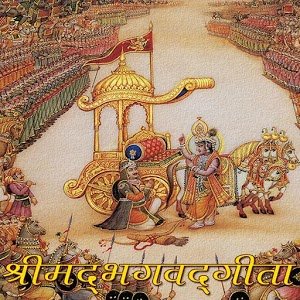
तन से श्रेष्ठ इन्द्रियां हैं , इन्द्रियों से मन , मन से बुद्धि ,
और बुद्धि से श्रेष्ठ है आत्मा (४२)
इसके पहले वह अर्जुन को श्रद्धा , भक्ति व् कर्म की श्रेष्ठता के बारे मैं बताते हैं .
श्री रमाकांत तिवारी का यह लेख एक नए रूप से इन शब्दों की व्याख्या करता है .
Faith is the most proximate word available in English when we ponder overSraddha. However, faith does not entirely convey all that is purported to be conveyed by Sraddha. It is a spiritual, divine accomplishment, never inspired or goaded by academic excellence or knowledge of any variety. It is awakened when the Eternal, Immutable within us is signalled by the Eternal, Immutable out of us. Then a subtle, divine, spiritual bridge of communion is created marking the advent of Sraddha and simultaneous suspension of scepticism. It has to do everything with the spiritual verities hidden within all of us that can never be examined or proved scientifically. These are sublime and perceptible to the eligible ones through certain subtle means and not through laboratory instruments. Our inner, subtle being is separated from ‘us’ through a certain veil of egoism and this veil can be dissolved only through spiritual means. Logic is too immature before Sraddha even to stand before it, leave alone competing with it. A logician may dub it purely intuitive which may be acceptable in the short run to it’s greater understanding.
Adoration is the most proximate word available in English when we ponder overBhakti. However, it does not entirely convey all that Bhakti does. Bhakti is essentially Sraddha in action. If Sraddha is philosophy, Bhakti is it’s manual of religion. For a Grammarian, if Sraddha is an Abstract Noun, Bhakti is it’s Verb. For a Samkhyayogi, if Sraddha is Purusa, Bhakti is His Prakrti. While Sraddha is independent of Bhakti, Bhakti can never survive without Sraddha i.e. Bhakti without Sraddha is worthless. Sraddha may be regarded as plenitude of Bhakti.
lntellect is the most proximate word available in English when we ponder overBuddhi. Buddhi carries within itself several attributes and intellect happens to be one of them. Buddhi is the faculty of rationality, a logical one that struggles to identify truth through the means of evidence and sound reasons. Buddhi emanates from the same Eternal, Inner Being from where Sraddha arises. However, it is so mystical that through the means of Sraddha, one can arrive at the Eternal, Inner Being while through the means of Buddhi, one arrives on the plane of arrogance, self-deception and egoism followed by imperceptibility of the Eternal, Inner Being ultimately. Tendency to rationalise every event logically including spirituality, is innate in human psyche. Pursuit of spirituality very well accounts for that but with a rider. Beyond a certain point, rationality and intellect must cease to exist, must surrender to the existence of Sraddha alone. Beyond the point, the Eternal, Inner Being must be probed into through the means of itself !! Only when intellect goes mute, do we listen to the whispers from Eternity, that we have been striving for all these years. When intellect is harnessed effectively, it turns out to be the potent instrument to attain the Eternal, Inner Being hidden within us, notwithstanding it’s limitations. Thus, intellect is an instrumentality of Sraddha severely limited in scope and extent when it come to the Infinite.
Mind is the most proximate word available in English when we ponder over Mana. As with Faith and Intellect, Mind too is incapable of conveying the entire purport that Mana conveys. Mana is always unrestrained to begin with, highly imaginative and wanderlust among objects of enjoyment. When exceedingly simplified, mind may be identified as the great grand child of the great grand sire that Buddhi is !! Intellect and mind are rational and irrational, restrained and unrestrained, disciplined and undisciplined, wise and ignorant respectively, aspects of one’s Cetana. Mana turgid with thoughts becomes Manas. When it contemplates, it becomes Citta. When Mana is goaded to take rational decisions, it becomes Buddhi ! So, Buddhi and Mana are essentially same. When Mana is weighed upon by ‘I’ sense, it becomes Ahamkara. Mana holds a tremendous faculty of activism which proves to be a highly effective tool in the hands ofBuddhi when restrained and disciplined. When Buddhi and Mana join hands, function harmoniously to explore the Eternal, Inner Being, cosmic journey to the Ultimate is profoundly facilitated. An introverted, harnessed Mana is yet anotherBuddhi leading to wisdom and awakening of the highest order. Such a Mana does not carry any baggage, stands liberated from subtle vanities. This Mana assists us in understanding deeper to the deepest realms of Cetana by virtue of it’s activism. Anahat Cakra is the abode of dwelling of Mana. This Cakra is lotus shaped with eight petals and Mana is located at the stalk of lotus. Each petal holds a different quality that revolving Mana experiences sequentially.
Mana being pulsation of Cetana, enhances and strengthens Buddhi, Buddhi enhances and strengthens Sraddha while Sraddha enhances and strengthens wisdom and higher attainments. From Sraddha arises Bhakti while from Buddhi, arises Mana. Neither Sraddha is blind, nor Bhakti, nor Buddhi, nor Mana yet man declines to concede existence of the Supreme and Absolute Param Brahmatma even while living and dying amidst His creations !!
2 Responses to “गीता : भक्ति ,श्रद्धा , चेतना , मन व् बुद्धि : रमाकांत तिवारी :Shraddha , Chetana , Man & Buddhi”