देश मोदी के विषय मैं दुबारा सोच रहा है . श्रीमती मधु किश्तवार के बदले विचार पाठक पढ़ सकते हैं .परन्तु सही मूल्यांकन तो तभी संभव है जब हम गोधरा कोच के जलने को एक अन्तराष्ट्रीय बृहत् साजिश मान कर सोचें और उसके बिना किसी विरोध के बीत जाने के दूरगामी दुष्परिणामों को भी सोचें . साथ मैं यह भी सोचें की क्या गुजरात और देश के और दंगों को क्यूँ नहीं इसी तरह देखते . क्या मोदी के प्रति भ्रामक प्रचार उसी अन्तराष्ट्रीय षड़यंत्र का हिस्सा तो नहीं है .
पाठक स्वयं इस लेख का मूल्यांकन करें .
Narendra Modi through the Eyes of Gujarati Muslims, Christians and…
Madhu Purnima Kishwar
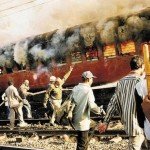
When some pockets of Gujarat were convulsed by violent riots in February 2002, I too accepted the version presented by the national media as well as our activist friends and assumed that Modi was complicit in the Gujarat riots of 2002. Therefore, I too signed statements against Modi, published articles sent to Manushi indicting Gujarat government. We also raised funds for riot victims. However, I refrained from writing anything under my name because I did not get the time to visit Gujarat and experience and assess the situation first hand. My earlier experience of covering various riots as well as conflict situations in Kashmir and Punjab had taught me that media reports cannot be trusted enough to take a definitive stand on such issues since they are often coloured by the ideological prism used by the writer. Therefore, I refrained from making statements on Gujarat.
Having spent a lot of time covering major riots—including the 1984 massacre of Sikhs, series of riots in Meerut, Malliana in the 1980’s, Bombay 1993, Jammu 1989 and having closely studied several others like Biharsharif, Bhiwandi, Jamshedpur, and series of riots in Ahmedabad, Surat, etc, I knew that barring Delhi 1984 all others were jointly orchestrated by the BJP and Congress. Even in the communal polarisation due to Babri Masjid demolition the Congress Party had been an equal partner in crime with the BJP.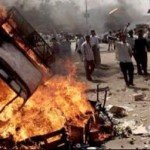
This dubious role of the Congress Party –at total variance with the ideological grounding of the grand old Party crafted by Mahatma Gandhi—played an important role in marginalizing the Congress in large parts of India. Knowledgeable Gujaratis told me that even in 2002 Congressmen avidly joined Sangh Parivar mobsters in carrying out communal killings, arson and loot. One also knew from earlier reports and later heard through informal networks that there was a lot of retaliatory violence by the Muslims which led to thousands of Hindus also suffering substantial losses and ending up in refugee camps.
Therefore, when BJP in general and Modi in particular, began to be singled out for attacks and demonised as no other politician before or after in known history, one felt an instinctive uneasiness about Hate and Oust Modi campaign. This uneasiness grew as it became obvious over the years that most of the NGOs, activists, journalists, academics involved in Modi’s demonisation enjoyed active patronage of the Congress Party and some even got huge financial support for carrying out a sustained campaign against Modi.
Even during the anti-Sikh massacre of 1984 in North India the slogan of those of us who worked with victims and documented the unprecedented massacre was– “Punish the Guilty”– though the complicity of the then Prime Minister Rajiv Gandhi, Home Minister Narasimha Rao, Lt Governor of Delhi P.G Gavai was brazen. But neither the PM nor the Home Minister or the Lt Governor were personally demonised.But in the case of Gujarat riots of 2002 the entire discourse came to centre around just one man!
In a recent interview with me, film script writer Salim Khan made an interesting comment: “Does anyone remember who the chief minister of Maharashtra was during Mumbai riots which were no less deadly than the Gujarat riots of 2002? Does anyone recall the name of the chief minister of UP during Malliana and Meerut riots or Bihar CM when the Bhagalpur or Jamshedpur riots under Congress regimes took place? Do we hear the names of earlier chief ministers of Gujarat under whose charge hundreds of riots took place in post-Independence India? Some of these riots were far more deadly than the 2002 outburst. The state used to explode into violence every second month? Does anyone remember who was in-charge of Delhi’s security when the 1984 massacre of Sikhs took place in the capital of India How come Narendra Modi has been singled out as Devil Incarnate as if he personally carried out all the killings during the riots of 2002?”
Why just distant riots, does anyone remember the fate of hundreds of thousands of Bodos and Muslims who were uprooted from their villages in July 2012 because their homes were torched and destroyed? As of 8 August 2012, over 400,000 people had taken shelter in 270 relief camps, after being displaced from almost 400 villages.The Assam chief minister delayed deployment of the Army by 4 days even though large number of Army units are stationed right there Assam. Thousands are still living under sub human conditions in refugee camps. Why are those riots already forgotten?
I also found it puzzling that almost all of those who have led the Hate Modi campaign are neither Muslim nor residents of Gujarat. Three of the most prominent figures of anti Modi Brigade from within Gujarat are not Muslims. Whenever a Gujarati Muslim has tried to speak in a different voice, he has been attacked viciously and made to pay such a heavy price that people just shut up in terror. The highly respected and eminent Muslim scholar, Maulana Vastanvi was forced to resign as Vice Chancellor of Deobandh simply because he said Gujarati Muslims had benefited from the inclusive development policies of Modi’s government. Shahid Siddiqui, the editor of Urdu daily, Nai Duniya was attacked and abused endlessly for simply doing an interview with Modi in which Modi defends himself against various charges leveled against his government. Siddiqui fell in line within no time and began singing anti Modi songs on TV.
The political discourse in India is so vitiated by Modi phobia that even if you express happiness at the quality of roads in rural Gujarat or 24×7 power supply in the villages and towns of Gujarat, you are branded a “supporter of fascism.” It is politically fashionable to defend Kashmiri secessionists, press for peaceful engagement with the Pakistani establishment which sends terror brigades to India and project murderous Maoists as saviours of the poor. But to say a word in appreciation of governance reforms in Gujarat is to commit political hara-kiri—you are forever tainted and tarred with the colours of fascism.
This intellectual terror created by the anti Modi Brigade pushed me to find out for myself why this obsessive anxiety about Modi? Why do “secularists” not want to be reminded that Gujarat has been riot free since 2002? Why don’t they want to document what made Gujarat—a state that witnessed hundreds of riots post-Independence leading to deep mutual estrangement between Hindus and Muslims—experience its first riot free decade after Independence under Modi’s rule? What do Gujarat Muslims have to say about it? Why they are not allowed to speak for themselves?
The demonization of Modi is based on the following charges:
- Modi is Anti-Muslim and anti-Christian;
- Modi allowed Muslims to be massacred in order to consolidate the Hindu vote bank.
- Religious minorities live under terror under Modi’s regime as second or third class citizens;
- Muslims are being ghettoized and impoverished through discriminatory state action;
- They have begun voting for Modi because of fear of reprisals by Hindutva forces.
I began my study of Gujarat riots driven by the following questions:
- What is unique about Gujarat riots?
- What was Modi’s personal role during those riots?
- What do Muslims of Gujarat have to say about those riots?
- If Modi critics are right about Gujarat being a deeply communalized society with Muslims living as a terrorized minority, how come the state has witnessed no riots since 2002?
- Why is the percentage of Muslims voting for Modi increasing with every election? Is it out of terror?
- How come hundreds of Muslims have won panchayat, zilla parishad and municipal elections on BJP tickets
My study of Gujarat will also cover an analysis of Modi’s Development Model which would include studying the nature of governance reforms, including police reforms since they are supposed to be intrinsic to his economic development model.
Modi claims his Gujarat development model is “Inclusive” while his critics reject it as “pro-corporate and anti- poor”, “pro-elite and anti farmer” as well as “majoritarian and anti minorities”, I will be looking closely at how the hitherto excluded or marginalized populations – small farmers, tribals, Dalits, Muslims, Christians – view it. Has it facilitated inclusion and upward mobility for them or are they being further marginalized? The accounts I share in the following pages provide very small glimpses of this. I intend to study them in depth.
I began my Gujarat journey by talking to a section of Gujarati Muslims and visiting their homes and neighbourhoods. This is a modest beginning in sharing what I learnt from my first visit to Gujarat and studying the court cases against Modi. What I have unravelled thus far is just the tip of the iceberg. I plan multiple visits to Gujarat in the coming months to study all this in depth.
I start with an account of 2002 riots because the stigma of those days has stuck to Modi like a leech casting a dark shadow over all else he does. It is based on interviews with key people whose experiences and statements deserve to be taken seriously. I am well aware this will upset many of those who have convinced themselves or have been persuaded by others they trust that Modi is the Devil Incarnate. However, my appeal to those well-meaning people who have caught the anti Modi virus because it is in the air is simply this: I am sharing with you factual accounts by people who are widely respected in Gujarat. They are providing concrete evidence of why they find the demonization of Modi unacceptable.
Please challenge me on facts instead of countering me with ideological attacks. I am only too willing to be corrected, if better counter facts are brought to my notice.
After the 2002 riots, Zafar Sareshwala – A Gujarati Muslim – was among those who led an international campaign against Modi. He became a celebrity when he announced his intention to take Modi to the International Court of Justice. But very soon he decided to change track.
At a time when Modi had been made into a national and international hate object, Zafar had the courage to start the process of engagement with Modi. He did this despite the fact that his own family suffered huge losses in the riots of 2002. Their factory was totally gutted. They had also suffered similar losses in numerous earlier riots as well in the 1960’s, 1970’s, 1980’s, and 1990’s. Every time their business establishment was burnt down and they had to start afresh.
Madhu Purnima Kishwar Founder MANUSHI
Professor, Centre for the Study of Developing Societies
Tel: 011 23978851, 08826377770
Website:www.manushi.in
Tel: 011 23978851, 08826377770
Website:www.manushi.in
6 Responses to “मूल्यांकन – Modinama -1 by Madhu Kishwar”