
 उच्चतम न्यायलय ने एक अति आवश्यक कदम उठाते हुए दहेज़ की शिकायत पर बिना जांच के गिरफ्तारी पर रोक लगा दी है . इस कदम की बहुत पहले लिए जाने की आवश्यकता थी . हज़ारों निर्दोष बूढ़े मा बाप जेल मैं वर्षों सढ़ रहे थे क्योंकि उनके पुत्र की पत्नी के परिवार ने पति के सब सम्बन्धियों का नाम ऍफ़ आई आर मैं डाल दिया था . कई बार तो दूर दराज रहने वाले मा बाप को भी नहीं बक्शा गया . कुछ पतियों ने क्षोभ मैं आत्महत्या भी कर ली . वैसे भी उच्च्तन न्यायलय ने खुद कहा की मात्र चौदह प्रतिशत केस मैं दोषी को दंड मिलता है जबकि पच्चीस प्रतिशत केस मैं गिरफ्तारी होती है . उच्चतम नायालय ने एक समिति बनाये जाने का निर्देश भी दिया है जो दहेज़ के मामलों मैं जांच करेगी और उसकी सलाह पर गिरफ्तारी होगी .यह बहुत अच्छा कदम है क्योंकि यह एक सामाजिक मामला है . मृत्यु मैं संतप्त परिवार भावनाओं मैं बह कर कभी कभी गलत कदम उठा लेता है.
वैसे भी न्याय का प्रथम सिद्धांत है की इसी निर्दोष को सज़ा नहीं मिलनी चाहिए . कोई भी इक तरफ़ा कानून जिसमें बिना जांच के गिरफ्तारी का प्रावधान हो , दुरूपयोग को आमंत्रित करता है .
इसी तरह बलात्कार के कानून को भी संशोधित करने की आवश्कता है . इसका बेहद दुरूपयोग हो रहा है . बलात्कार एक अबला नारी के साथ डरा कर जोर जबरदस्ती से शारीरिक सम्बन्ध बनाने को कहते हैं . परन्तु एक बहु चर्चित केस मैं फिल्म निर्माता मधु भंडारकर को एक अभिनेत्री प्रीती जैन ने बलात्कार की चपेट मैं ले लिया क्योंकि उन्होंने शारीरिक संबंधों के बाद फिल्म का रोल देने की पेशकश की थी जो की उन्होंने बाद मैं नहीं दिया . यह बढ़िया है की मर्जी से बनाए हुए शारीरिक संबंधों को बलात्कार कहना एक दम गैर कानूनी है .यदि भडारकर रोल दे देते तो बलात्कार नहीं था . ज्यादा से ज्यादा यह एक कॉन्ट्रैक्ट को न निभाने की शिकायत है . उसमें भी किसी गैर कानूनी चीज़ के लिए कॉन्ट्रैक्ट नहीं किया जा सकता जैसे सुपारी लेकर ह्त्या नहीं की आ सकती . इसी तरह कानूनी वैश्य्वृति नहीं की जा सकती . नारी मुक्ति की एक विकृत परिभाषा प्रचलन मैं आ गयी है जो प्रीती जैन जैसों को साहस प्रदान करती है की वह मानें की उन्होंने अपनी देह का सौदा फिल्म के रोल के लिए किया और न मिलने पर उसे बलात्कार कह दिया .
अकसर दफ्तरों मैं महिला कर्मी अधिकाँश देर से आती हैं और जल्दी निकल जाती हैं क्योंकि उन्हें घर मैं खाना बनाना है . किसी दफ्तर मैं कुछ काम के घंटे होते हैं . अगर बराबर तनख्वाह महिलाओं का अधिकार तो बराबर काम भी उनका दायित्व है. उनका काम पुरुष क्यों करें . इसी तरह महिलायें बड़े शहरों मैं नियुक्ति मांगती हैं और पुरुषों को दूद दराज़ के इलाकों मैं भेज देते हैं . किसी तरह का कानूनी भेदभाव गलत है. यहाँ तक किसी जीव का अपने जीवन यापन व् खाने की व्यवस्था करना उसका ही दायित्व होता है. नारी का जीव्नोपरांत लालन पालन पुरुष की जिम्मवारी नहीं हो सकती .विवाह मैं दोनों के दायित्व होते थे . अब विवाह भी इक तरफ़ा हो गए हैं . महिलाओं के कर्तव्य अब नहीं बचे क्योंकि नारी मुक्ति ने उनको मुक्ति दे दी है .परन्तु पुरुषों का विवाह मैं शोषण जारी है .जीवन यापन के लिए पैसा देना एक बात है परन्तु तलाक मैं करोड़ों व् लाखों की राशी दिया जाना कितना आवश्यक है इसकी पुनर्व्याख्या की आवश्यकता है. इसमें भी सबला नारी को संरक्षण की आवश्यकता नहीं है . बच्चों को मा का मान लेना एक नयी विचार धारा है जिसका विरोध आवश्यक है . बच्चे दोनों के सामान होते हैं और रहने चाहिए .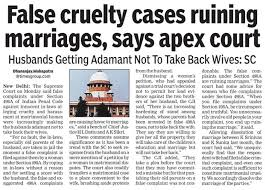
राजनीती ने सिद्ध कर दिया है की महिलाओं को देवी मानना भी उतना गलत है जितना उन्हें चुड़ैल मानना . अनेक महिला मुख्य मंत्रि बराबर के भर्ष्टाचार मैं संलिप्त पाई गयी हैं . जेलों मैं अनेकों महिलायें ह्त्या के मालों मैं दोषी पाए जाने पर सज़ा भोग रहीं है.
इसलिए किसी भी महिला या पुरुष को बिना जांच के किसी भी मामले मैं दोषी नहीं मानना चाहिए . स्त्री पुरुष के संबंधों मैं कानूनों को नयी यथास्थिति को दर्शाना आवश्यक है .
न्याय पर स्त्री पुरुष का बराबर अधिकार है और इसका वोटों के लिए उल्लंघन नहीं होना चाहिए .
SC says no to automatic arrests under dowry law
The police can no longer ‘automatically’ arrest the accused under the ‘dubious’ anti-dowry law, the Supreme Court ruled, expressing concern over the misuse of Section 498A of IPC by disgruntled wives.
india Updated: Jul 03, 2014 18:09 IST

Hindustan Times
The police can no longer “automatically” arrest the accused under the “dubious” anti-dowry law, the Supreme Court ruled Wednesday, expressing concern over the misuse of Section 498A of IPC by disgruntled wives against in-laws and husbands.
The court asked state governments to ensure that the police didn’t go on an arresting spree — as was the practice — in dowry harassment cases.
The attitude to arrest first and then proceed with the rest was “despicable” and must be curbed, it said. The police would have to give reasons and proof to magistrate before making an arrest, the court said.
A bench of justice Chandramauli Kumar Prasad and justice Pinaki Chadra Ghose said Sec 498-A was introduced to combat harassment of women at the hands of husbands and his family. “The fact it is a cognisable and non-bailable offence has lent it a dubious place of pride amongst the provisions that are used as weapons rather than shield by disgruntled wives,” the bench said.
Driving home the point, the court, quoting crime statistics, said nearly a quarter of those arrested under Sec 498A in 2012 were women, most of them mothers and sisters of the husbands.
Added to the Indian Penal Code in 1983, 498-A provides for maximum imprisonment of three years and fine while the maximum sentence under the Dowry Prohibition Act, 1961 is two years with a fine.
“As the arrest curtails freedom, brings humiliation and casts scars forever, …we believe that no arrest should be made only because the offence is non-bailable and cognisable,” the court said, asking the police to shun their colonial mindset.
Magistrates, too, would have to put on record that the reasons given by the police justified detention, the court said said. The failure to do so would invite departmental action and amount to contempt of court.
The order came on a petition filed by a man from Bihar seeking anticipatory bail in a dowry harassment case filed by his wife.
Concerned over its abuse, the Law Commission and Parliament’s standing committee on home affairs had recommended that offences under Section 498A IPC be made compoundable i.e. husband and wife should be allowed to settle the dispute between themselves.
One Response to “दहेज़ कानून के दुरूपयोग पर उच्चतम न्यायलय की रोक : बाकि एक तरफ़ा कानूनों की समीक्षा भी आवश्यक है .”