 Taken from e mail of sh A. Bhagra
On Saturday, November 23, 2013 8:39 PM, Udayan Som <udayansom@gmail.com> wrote:
BOOK ‘THE SIEGE’ EXTRACTS___Pakistan Will Keep Striking India Again & Again – It Is So Easy !!!!!!!!
See how we suffer again and agian.
Pakistan Will Keep Striking India Again & Again – It Is So Easy !!!!!!!!
Keep Striking India Again & Again – It Is So Easy !!!!!!!!


‘Headley loves Mumbai, but hates India; what the country stands for’
Last updated on: November 21, 2013 10:34 IST
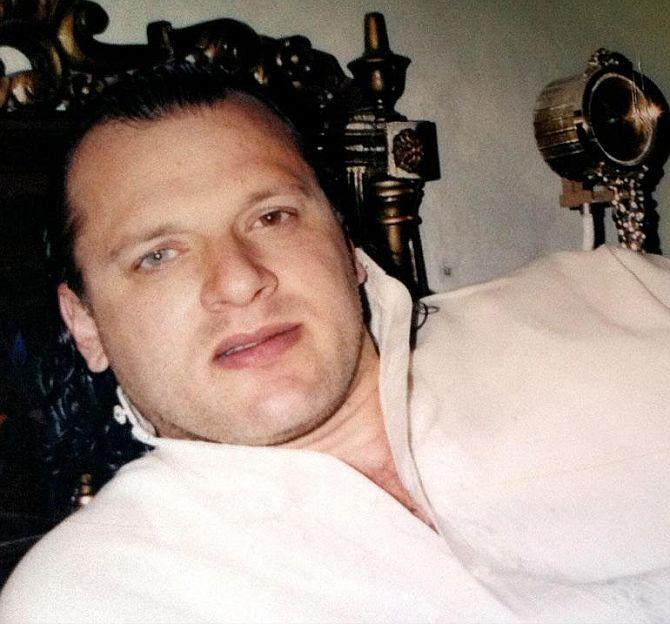
Adrian Levy, co-author of the book The Siege: The Attack on the Taj, speaks toRediff.com‘s Sheela Bhatt in a
compelling interview.
In the first part of the exclusive interview, Levy revealed how America’s compromise with David Coleman Headley, one of the masterminds of the attacks, affected India’s national interest.
Part I: 26/11: ‘America sacrificed Mumbai to keep Headley playing’
In the first part of the exclusive interview, Levy revealed how America’s compromise with David Coleman Headley, one of the masterminds of the attacks, affected India’s national interest.
Part I: 26/11: ‘America sacrificed Mumbai to keep Headley playing’
You have tried to understand David Headley’s psyche. Can you tell me what his understanding of India is?
It is so conflicted. I think we wrote this in the book really clearly that he loves Mumbai. He thinks it is a really rambunctious city of enormous energy. A city of enormous wealth, a city of enormous colour. A city with a large Muslim population. He loved the city’s traditions.
And he understood all of that. He liked the political hucksters, he understood the evolution of the Shiv Sena ideology. The evolution of Muslim gangsters. And you see all this in the way he wrote about the city, in the way the relationships that he formed.
His love of the Taj Mahal hotel is recorded. He hung out at the Taj all the time. And a lot of that time he wasn’t working in the hotel. He hung out at the Taj because he liked the Harbour Bar. He liked the Sea Lounge. He liked to be seen sipping champagne with his rich friends, living the high life in Mumbai. Figure that out.
You got this split, whereby on one hand he loves the city, but he hates the country; what the country stands for. On one hand he loves the people. But he can justify his hatred of certain people, some Hindu people, some Jewish people, some American people. You know he is not really a political animal.
So when you call him a psychopath, what do you mean?
Well in a sense that ultimately he cares about himself. The deal with Headley is Headley. The deal with Dawood Gilani is Dawood. He has always sacrificed all the people around him.
His mother, as you know, was Caucasian. She was from Maryland and from a remarkable family, an adventuress. And she got together with his father, who was a very famous, wonderful Lahori broadcaster. Syed Gilani was a fantastic man.
”Headley is always trying to play people off against each other’
Last updated on: November 21, 2013 10:34 IST
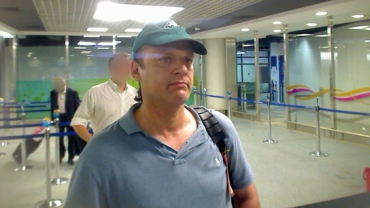
David, according to his mother, was suffering from lack of self. He was divided between two communities so much that he almost couldn’t find himself.
Was he the Pakistan boy? He went to the military academy in his teenage years.
Was he the all American kid who lived on the Upper Westside in New York and opened a video store and dealt in drugs?
Which one of these conflicted identities was his?
and in the midst of the fight between Pakistani Dawood and American David, he got lost.
Because, when you or I, if we have a sense of self, we have the morality, social conscience, friendships, we don’t sacrifice our friends, family. Where are those things? They have all gone. They have all been stripped away.
The friends, he turns over, he sacrifices them. (Tahawwur) Rana he betrays. He was his best friend from school. All of his criminal associates he betrays. The Lashkar-e-Tayiba, he betrays.
You said America gave so much information to India and other countries like France about a possible terror attack.
Why would Headley give such important information about the terror operation in Mumbai to the Americans in first place? He was not forced to do that. He could have given any other fake or real information.
I think he also had a bigger plan. He is always trying to play people off against each other because Headley believes he is cleverer. Headley is a survivor.
If you talk to DEA (US Drug Enforcement Administration) agents who interrogated Headley and who worked with him and if you talk to the people within the intelligence community who interrogated him, they found he was amazingly charming, amazingly convincing.
If you see Headley in action on any of the tapes, when eventually he was interrogated by the FBI (Federal Bureau of Investigation) in 2009 and 2010 after the Mumbai attacks — there are 80 hours of footage — he is the most remarkable communicator. He puts everyone at ease in the room.
When you say ‘remarkable,’ what do you mean?
He is very convincing. He is a human being who understands the weaknesses of other human beings. He understands the need of people to be loved and liked. He is a salesman. He goes into these situations and he knows everyone has a weakness.
The centre point of your story, your book is Headley, actually.
Well, no. I think, actually, he is the evolution of the plot.
What comes out of this is the conflicts of interest of America.
On the broader scale, the backdrop is the conflicts of interest. But actually you know it is the people who drive this story.
‘Religious dogma is very important to the Lashkar’
Last updated on: November 21, 2013 10:34 IST
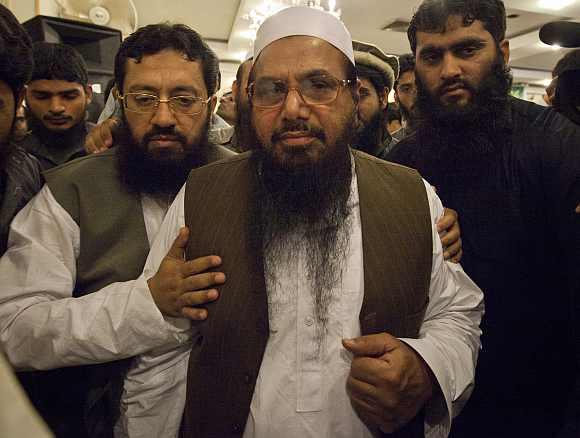
Tell us about the Karachi plot. How did the actual training of the terrorists happen? How did the Lashkar move ahead with this terror plan?
The plan didn’t actually move to Karachi till a later date. The really interesting thing is that they themselves couldn’t work out how to get the plan going.
They began with a core group of 32 men and those men trained very hard, they were religiously indoctrinated… that is not really a fair word…
The LeT, you know, is quite principled — to them. the religious dogma is very important. It will not take anyone willy-nilly like Ilyas Kashmiri (did). If you want to be a fighter, join Kashmiri.
If you want to believe in Deobandism, if you want to believe in the Sunni sect and back the Hadith view, then you would move to a different organisation.
The LeT has a bit of a secular view. So all of these people went through complex training.
Who was the head?
It was run by two, three people who were effectively involved — there is a military coordinator, who is called Qahafa, it is a very strange nom de plume.
Then the second in command for foreign operations is Sajid Mir, which is his real name.
The third man involved is a military trainer who was primarily the LeT commander in Kashmir, in the valley for many years, who was brought out specifically for this job.
And those three were put in charge. And they got through their religious indoctrination which is very detailed. And they do that in Muridke, the LeT headquarters outside Lahore. And they are put through a whole series of experiences that none of them have had.
The philosophy of religion, it is quite challenging. It is not simply — as people portray in movies — like rote learning. They go through some very deep debates.
The philosophy of religion, it is quite challenging. It is not simply — as people portray in movies — like rote learning. They go through some very deep debates.
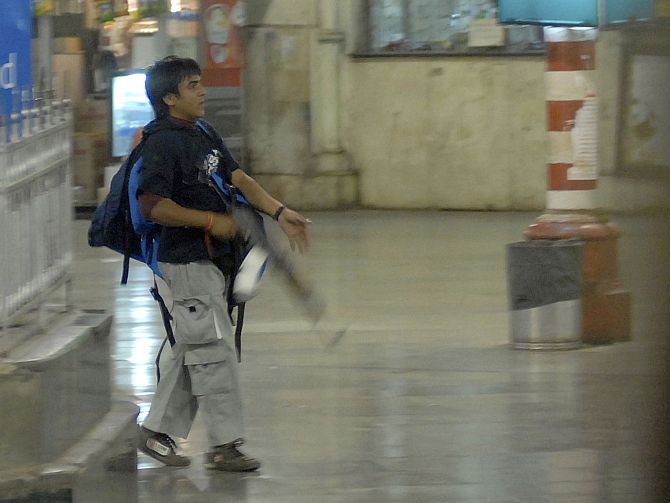
Like Ajmal Kasab?
Yes, like Kasab. He had to confront for the first time a school of thinking. It is not just about reach for the gun; he had to actually listen to a process of thinking that he hadn’t heard before.
They (the killers) meet a community within the LeT because what the LeT does is to remove the need for everything outside the LeT.
So if you were from a fractured family and you get swept into the organisation, they slowly chip away at the bonds so that your family is the LeT.
I tell you how this works with the group of 32. Many in that group grew scared when it became clear that a plot was emerging. No one knew it was Mumbai.
But as soon as some details were clear — for example, it would be a fidayeen operation — people rang up uncles and brothers, people who had good families, and they said ‘I am scared, this is not why I joined. I joined to fight in a military conflict, I didn’t join for this and I didn’t join to kill myself.’
And people knocked on the gates of LeT and they said we want our sons back. They paid fines and they took their children away.
Every week people dropped out and a lot of the people who were left behind were from families who were heavily fractured, where the mother and father were split or where the father was absent. Where there was no one home, where there was no money, where there was no telephone.
They are the people the LeT picked.
So they start off there, they have religious indoctrination, they move them up beyond Muzaffarabad in Pakistan occupied Kashmir, to the Chella Bandi hills, and there is a base up there which was actually created initially for the first big push for training in the Kashmir valley.
A section of that base, in a place which they call House of the Warriors, which is just the mujahid house, was turned over to the group of 32.
When they arrived, their names were removed, they were given numbers, they were split up into canvas tents, and they were put through the military mill.
So they have gone from spiritual to military.
And the group gets smaller until there are 20 and then they go back to Muridke and they are involved in more spiritual training, physical training, they begin to introduce swimming because the marine element has come to the fore.
The Lashkar built a bit of a white elephant, a very rare folly, something really stupid.
They built an Olympic size swimming pool in Muridke in the university. But there is no filter system. So it is basically a tank, you fill it with water and the water turns black and no one wants to swim in it.
So they built this really massive pool which after a while was treacle thick. So they used to swim in the canal outside, the canal was really clean.
And these guys begin to learn swimming and went back to Muridke where they received much more intense training.
Things were very interesting in the camp. Some things stand out. The first thing that stands out is the kind of training that was offered. They were offered training in room clearance using, what I would describe as, Western methodology.
A method of moving in close spaces in rooms using hand signals so there is no speaking.
They created mock-ups with buildings so they would learn to take doors down, shield behind mattresses, to use each other as human shields, to communicate non-verbally so that the group would move together.
And they did this at night, low vision, under light fire, with no food. There was a process culminating in awards to reward the people who were most successful. It was very sophisticated, not involving lots of money.
‘The Lashkar is full of soldiers; it is full of spies, and you never know who is retired and who isn’t’
Last updated on: November 21, 2013 10:34 IST
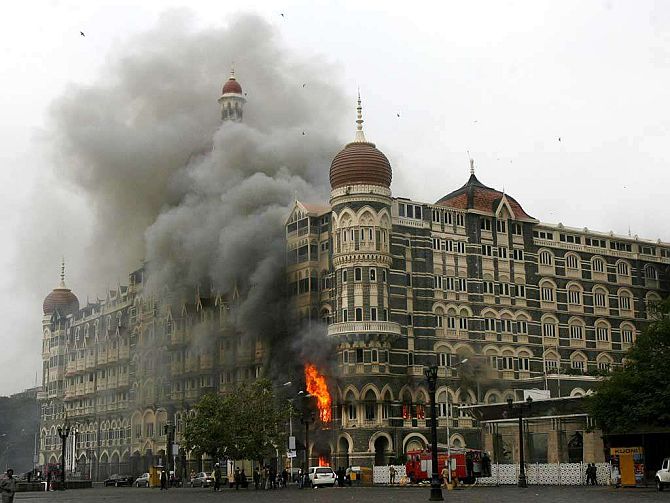
So when and how did they know this training is for Mumbai and the Taj Hotel?
They didn’t know it was the Taj initially. They didn’t know until they were given a final briefing in Muzaffarabad where the targets were identified and in this camp in the hills in the House of the Warriors, they were shown for the first time the material gathered by David Headley.
That material was the videos shots inside the Taj when he joined a tourist group on one of the Friday afternoon tours. He was there with his mother-in-law’s tourist camera shooting everything.
All the still pictures, the GPS, way-markings for the whole city were shown to the boys.
And then they mapped that over Google Earth. They (the terrorists’s trainers) could sit these country boys down before the computer. They had never seen one before, let alone the Internet.
They showed them Google Earth and a GPS system, and said you are going here. And the teams are broken up.
So, they begin to get the idea that there will be teams and that Mumbai will be the target, but in fact even then it is not the finished job.
Because another operation occurs in Kashmir and a quarter of the team are moved off for a specific hit-and-run operation and more recruits are brought in to top up the team.
And then they all get together down in Karachi where the control room has been set up, pretty near to the airport, in a military controlled area, which was an obvious place for them to be.
They had two centres, a control room there and two places for the team. One is effectively a bunking room, where there was lots of equipment, maps.
The other room is on a creek to the east of the city and on that creek you could get out to the sea eventually which meant that they could practice on the still waters of the creek.
An interesting thing happened here. The intelligence people who were hanging around the Lashkar — remember the Lashkar is full of soldiers; it is full of spies, and you never know who is retired and who isn’t.
It is a ball of wool. So many of them are military, it is very difficult to say whether they are military serving on deputation or whether they have left. They all claim to be retired.
Headley asked one of the army majors, who claimed to be a retired officer, from where a lot of the information was coming from and he was told the military have become particularly proud of a series of sources they have in India.
They had one in New Delhi. And they have these names for their sources. The prime source in Delhi was christened Honeybee. Honeybee had access to material which allowed Lashkar and the Inter Services Intelligence to know how Indian Special Forces would react if the attack took place.
So what is the security plan on the floor? How will Indian counter-insurgency happen? On the basis of the Indian material, the training manuals were prepared which included training manuals for room clearance, for top to bottom hostage taking clearance, they had all sorts of marine charts and they had a schematic of Mumbai that showed a potential number of landing places, something like four spots were identified.
‘Honeybee has to be a person connected to national security’
Last updated on: November 21, 2013 10:34 IST
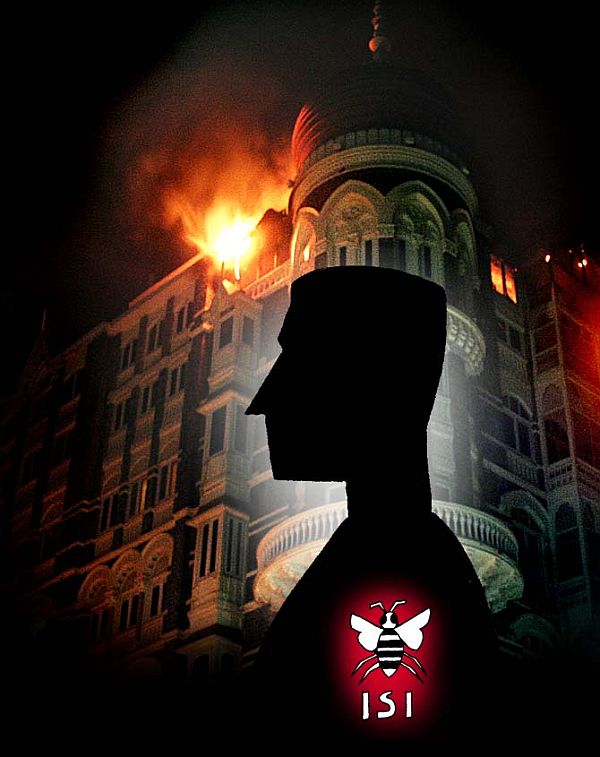
How did they get this Honeybee?
They claimed this was a name they used to disguise an Indian source that they recruited who was passing information for money.
Who is he?
If we knew, we would have written that.
He or she?
He. As far as we know. Based in Delhi.
From the military?
I cannot say. They described it as someone… I cannot say because I don’t know. It is ambiguous whether Honeybee is military or whether it is someone in a ministry who has access to the same information.
It has to be a person connected to national security. It is someone within this orbit. It has to be.
I am less inclined to believe that it is someone in the military. Because the Indian military is a very ideological establishment. It is less likely because, as you know, it is very fraternal. But these are guesses. You have to say we don’t know.
Did you try to find out?
Yeah. I tried. I haven’t got very far on this. But you know… It is quite shocking. Because it seems that it enabled them to work out what to expect after the event and what the weaknesses of the Indian response would be and how to evade it.
So for example, they knew how a Mumbai police control room worked, they knew how the GPS system works in Mumbai cars.
In Karachi, they built a model of the Taj Hotel using blueprints so they had a kind of a schematic of the Taj. That was shown to the boys in Karachi.
I think for them it was not really the most significant thing. I think the digital elements helped.
The fact that if you have never been to a city, but you know street view on the map, if you put it on street view, then you can walk down the highway in Colaba, past Leopold, and take a right and head down two blocks and hit the service lane at the back of the Taj.
That is what you need to know. You need to know the tailor shops on the left, the hardware store is on the right. It is that kind of thing that helped them. These are country boys, they don’t have any great experience.
‘They are brought up in districts held together by the governments of jihad’
Last updated on: November 21, 2013 10:34 IST
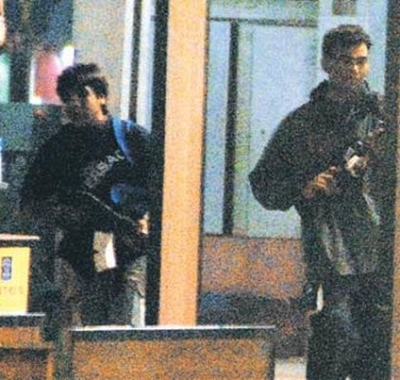
What is the life story of these ten terrorists?
This is a really interesting thing. First of all, nearly all the names given are partially wrong. The lives of eight of them is pretty identical. In the sense that they are, broadly speaking, from Pakistani Punjab, broadly speaking, mostly from southern Punjab. As you know, that is the hot bed of sectarianism where there is presence of LeT or Lashkar-e-Jhangvi or Sipah-e-Sahaba, particularly.
It is also an area where a lot of political horse-trading takes place. Really, they run a government within a government and no one is in control of those groups.
You can see that if you go to these places, particularly to Okara, where Kasab comes from. Zaki, the LeT military commander, is from Okara, too.
It is significant because Okara was a very impoverished, down-on-its-luck city until lots of boys began to die in Kashmir. Then it was renamed the Blessed City. Because the only way it got virtue was through the fidayeen.
There was no industry, no social welfare. The welfare was provided by the LeT. The hospitals are run by them, the seminary is run by Sipah-e-Sahaba.
The only way you could get medical treatment or money for the family was by being an adjunct. But it is not just joining the Lashkar, it is also about publicity.
You could go to Okara now, what it says on the walls is not Bollywood, not cricket, but jihad.
There are newspapers with cartoons and in the cartoons are the fidayeen. You know they joke that there is a character called jihad-Joe for school boys. And the Lashkar knows this. They describe children as blank blackboards. They fill them with these ideas.
Even now?
Even now… completely! This is a very difficult thing because in the absence of the writ of the government, in the absence of investment in education, what will happen is that these groups pick them out.
So, these 10 boys, the first thing to identify is broadly speaking their families are fractured. Broadly speaking, they are from that geographical area. They are brought up in districts that are held together by the governments of jihad.
More than that a lot of the boys come from places which can watch India. They are from border areas where they look out of their bedroom windows and they are looking over the borders.
They are involved permanently in the instability of the border. They know about the tit-for-tat raids, the shelling from all the border wars. So there is the culture.
I can think of two of the boys whose family had lost members in the 1965 and 1971 wars. So in sense, the view from the bedroom window then becomes the world view and then they are picked on by an organisation offering them a glorious way out. Even then children try to get out.
One of the ten (terrorists) is slightly different. In that the leader of the operation was much more decisive. And we know from all of the conversation that took place from the interrogations of Kasab.
The man in the end picked out to lead the operation, in some sense, was much more of a veteran. But he was not typical of the way the operation worked.
‘The terrorists’s families were told they had died in Kashmir’
Last updated on: November 21, 2013 10:34 IST
Nine terrorists died in Mumbai, but there is no social visibility of their parents. Neither did the media in Pakistan report about them. Why?
The second part of the story is this. All of the families were approached by the jihadi outfit, they were all approached by LeT afterwards, they were approached by the intelligence apparatus and they told the families ‘I am sorry but your child is dead.’ They claimed the children died in Kashmir, there was a glorious battle. ‘Here is a photo. This is your son, he is a shaheed (martyr). And he died in the war at Baramullah, in Sopore…’
The families were not told that they died in Mumbai?
The intelligence agencies categorically denied that. They told the families you would hear lots of stories. It is black propaganda. These boys fought in Kashmir. Every family was given the same story.
How do you know that?
We went to all of them. In two cases the family was told the boy had drowned running away from the Rashtriya Rifles in a river in Kashmir. Their whole thing was to pay money. They (the terrorists’s families) got shaheed money. They got cash from the Lashkar, pitiful amounts of money.
How much money?
Really insignificant amounts. They were promised like Rs 1 lakh… nothing really, for a life. And they were given this back up story and they were told that anyone comes to you. say this only.
26/11: ‘America sacrificed Mumbai to keep Headley playing’
Last updated on: November 21, 2013 10:28 IST
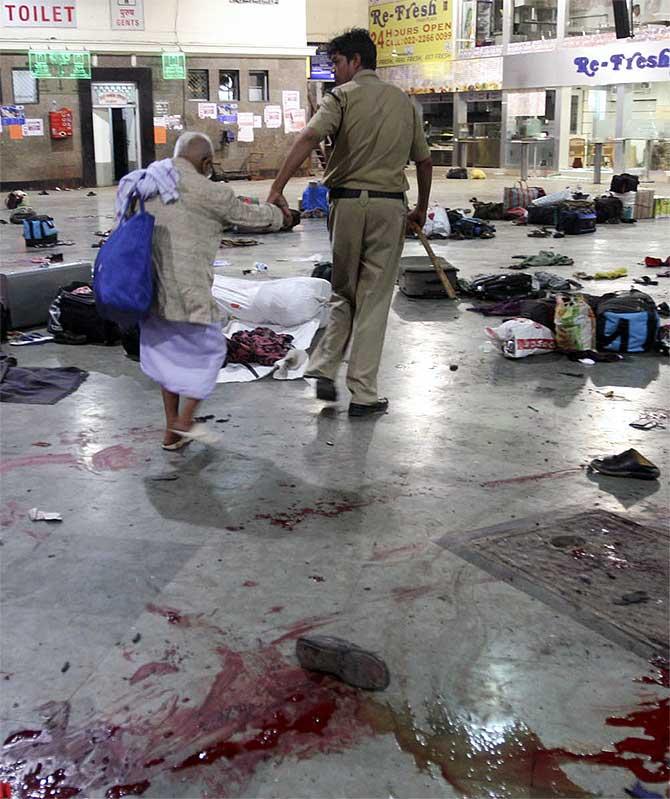
‘What America could figure out is that this finally was an American with an American passport operating in Pakistan who had access to Al Qaeda. Now the prime objective of that time was the capture of bin Laden.’
‘This is three years before Abbottabad, the only thing that the US intelligence agencies were thinking about was how do they decapitate him, how do they cut the head off of Al Qaeda and here was this tantalising, untrustworthy, difficult, hard to control, psychopathic individual, who was American.’
Adrian Levy, co-author of the book The Siege: The Attack on the Taj, speaks toRediff.com‘s Sheela Bhatt in an compelling interview.
This is one book that was dying to be written. The siege of the Taj Mahal hotel in Mumbai which began on November 26, 2008 by Pakistani terrorists and ended three days later was one emotion-filled, historic event that caught the world’s attention.
Not just Mumbai, but India was under siege as Pakistani jihadis went about killing 166 innocent people, largely Indians.
Those hours were filled with astonishment, anguish and anger. A few Indian authors published books soon after the terror attacks, but no Indian media or authors have brought out the depth of the event and spread of the operation that took place before the horrendous event and its implications for the future of India and the world.
The comprehensive version has now arrived in the form of The Siege: 68 Hours Inside the Taj Hotel. The distinguished authors Cathy Scott-Clark and Adrian Levy are well-respected names in South Asia with remarkable books like Deception: Pakistan, the United States and the Global Nuclear Weapons Conspiracy to their credit.
Levy has written extensively on Burma, Russia, Cambodia, and Pakistan. He has worked with the British print media and is an acclaimed filmmaker who has directed some incisive films for various channels, including the BBC and The History Channel.
In an exclusive interview to Rediff.com, Levy narrates the hard work that went into the making of the book which highlights how America’s compromise with David Coleman Headley, one of the masterminds of the attacks, affected India’s national interest.
The book is worth reading because it is written after getting Pakistan’s version of the genesis of the terror plot, America’s dealing with Headley and its self-centered diplomacy and, most importantly, truly exhaustive details that have been obtained from the Indian system.
Scott-Clark and Levy travelled to 15 countries on four continents and interviewed hundreds of sources, witnesses and people, including the parents of Pakistani jihadis who landed in south Mumbai to attack the city.
The book re-creates the human tragedy inside the Taj Mahal hotel in those 68 hours, giving a virtual second-by-second account of what went on inside when the world was watching the horror unfolding on television.
Levy tells Rediff.com‘s Sheela Bhatt that even five years after the terror attacks, the Indian establishment has not honestly approached the event and learnt the right lessons.
‘People are not taking 26/11 seriously’
Last updated on: November 21, 2013 10:28 IST
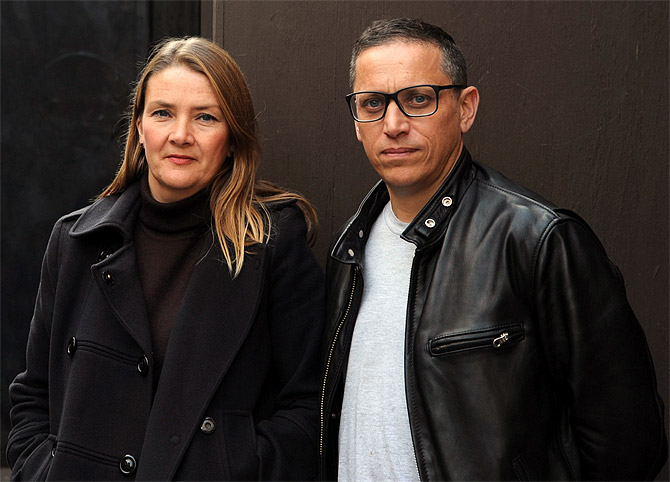
What brought you to this subject?
I was really motivated by the fact that no one, to my mind, has really taken this seriously.
You know when 9/11 happened, there is the 9/11 Commission report and there are nearly 600 pages of very detailed analysis.
When 7/7 happened in London, there are thousands of pages and it is available for the public to see in the National Archives, it is being updated all the time.
In both cases, particularly in the American experience, there are may be two or three great books that have been written — Looming Tower by Lawrence Wright; Steve Coll has written a great work on (Osama) bin Laden.
And you tell me what happened after 26/11? The Pradhan Committee report is just 64 pages. 64! No interviewing of the intelligence agencies, no interviewing of the military, no interviewing of the National Security Guard, no politicians, just the police.
This is not a serious response to a seminal event like 26/11. The sacrifice by people, and also the stigma of the attack on the city, and it is one of the first of many things that will happen now.
It was a new wave. We have seen it with Nairobi and we will see it again and again and again. And it is very significant for so many reasons. Firstly, because people are not taking 26/11 seriously enough. I feel they have brushed it under the carpet. I think that is not also a testimony to the dead, to the survivors, to the people in the security service, the Taj staff, the guests, the policemen who did fight, where are their stories?
You know, maybe a little bit on cable news, something on YouTube, maybe (reporter) Ashish Khetan wrote something in the book (26/11 Mumbai Attacked) that came out in 2009 which was an immediate gut reaction.
Where is the attempt to do the big picture? Tell this as it is and say that this is the story of 26/11? This is my thinking.
What is the big picture? Can you take us to Pakistan and let us understand the scene behind the attack?
I think there is a ladder here and I think that two things happened simultaneously.
The first thing is that Pakistan, the military and intelligence establishment, was going through a very tumultuous period.
Incredibly racked by problems, leading up to the Red Mosque siege in 2007, when you remember (then Pakistan president Pervez) Musharraf made the decision to send in his boys from the Special Services to storm the mosque.
That was a turning point for Pakistan. A watershed.
Because suddenly the jihad industry, which they nurtured and grew and that they funded and trained, had split. And after Pakistani forces were seen in a mosque, killing seminary students and women, then the movement split, many became radicalised and turned against the State-sponsored outfits and moved to Al Qaeda.
It was a very important event. So, the ISI, elements of the military, became very scared. They were no longer in control of the foot soldiers that General Zia-(ul Haq) created lovingly from 1979 onwards.
And at the same time one of the prime organisations that has done the foreign policy, the black foreign policy, of Pakistan is the Lashkar-e-Tayiba. The Army of the Pure had solely been focused diligently really on Kashmir. And that was the recruiting ground. But now it was losing people left, right and centre, its military council was split, people wanted to take up the Khajul(Islamic finance) for Ummah and not for Kashmir.
They wanted the pan-Islamic platform, like Al Qaeda. They were jealous of Al Qaeda, the young. So the ISI needed a plan, they needed to show up the jihad factory. Lashkar was split and needed something cohesive that could bring itself back together again.
‘Headley put the 26/11 plan up as an idea to Lashkar’
Last updated on: November 21, 2013 10:28 IST
Adrian Levy’s interview with Sheela Bhatt continues…
Into this mess, shortly beforehand, there walks this chameleon — Dawood Gilani who would become David Coleman Headley, he was also needing a plan.
Now the story of Dawood Gilani is that he has always needed a plan. If you look at his life very carefully, basically from his birth onwards, he needed a big idea. Essentially, he was a drug dealer when he got caught. He needed a plan.
So when he was caught in 1988, he offered up all the people he was working with so that he got a short sentence. And he offered to work directly for the DEA (Drug Enforcement Agency) in America.
This methodology would be one he would pursue throughout. He got caught again, he offered up more people. And by the time he gets to 1998 and caught again it was 10 years of informing, 10 years of working his way into the intelligence establishments in America. He was caught in New York.
Being extraordinarily bright and a psychopath to some degree, he believes that what America wanted most was a grassroots understanding of the jihad factory being grown in Pakistan. Already, everyone was getting worried.
If you remember in 1998 the US embassy bombings in Africa. America has been caught in Kenya, Dar-es-Salaam. The embassies were blown up simultaneously, hundreds were injured. And apparently it is Al Qaeda. They don’t know who Al Qaeda really is or bin Laden.
And here is an American — half Pakistani, half American. Carrying an American passport. Two mismatched eyes, blond, speaks Urdu, speaks American like an American, who is offering a bridge between America and the jihad factory and he says that if you let me off this sentence for drug dealing, I will take you into the world of jihad.
And in 1999 this is very tantalising, if you look at the backdrop. So to this man, it is another deal that is being offered. And he would wedge his way in.
So he, between 1999 and 2006, did not get very far. And the people who were backing him and paying him and pushing him in America were growing bored.
Gilani was in danger because he was losing his influence. But around the 2006 period, to come back to your question finally, Pakistan is approaching this tumultuous watershed, Lashkar is split, the military is looking for how to keep hold of its jihad factory and Headley/Dawood appears, and he offers a plan.
He says ‘Why don’t you use me as the Trojan Horse? I look like a white guy, as you say like agora. I have an American passport.’ And he said ‘I will stake out a city for you and I will choose places where there is an international crowd and I will enable you to attack India but also to appease Al Qaeda, the people who are enamored with Al Qaeda, by broadening the base of the attack out, attack the West, attack America, attack the British, attack Jews. We all find somewhere like that and I propose that the place to do that is the metropolis.’
He told this to the LeT. He put this plan up as an idea and he in fact put this idea up because he himself believed that he was getting nowhere with any organisation.
LeT was initially suspicious but together with the intelligence establishment, they all became sure that this was a great idea because here was a plan where for one faction India was still the target, which was very important to the old faction, but the new faction, it was an Al Qaeda-kind of raid because it was also taking on the West. Taking on Israel in the form of attack on the Jews.
And it was going to be potentially — if they made it work — an attack on an enormous scale, captured by live television, like 9/11 was, shown around the world as it happened. It would be India’s 9/11. I think that those were factors that created enormous interest potentially.
The coming together of the right time, the right people, the right plan, and all of that begins to embed and pretty much, as soon as the plan is discussed, elements of it are reported back to the American intelligence establishment. They know things right at the beginning.
Don’t you think Headley may be a pawn, still? The way you are highlighting Headley in your book, can you give me more evidence for your story?
The first thing to establish is how he works. So, if you examine his relationship with the American authorities, you can see that every time, first of all when he is threatened, his methodology is to give up the people he works with.
So when he was a criminal, he gave up the other criminals, even though they were his best friends and his accomplices.
When he was with his best friend, (Tawahhur) Rana, from his school time, at the first opportunity he manipulated Rana; he used Rana’s political past. In order to drive through the NWFP (North West Frontier Province) in Pakistan to get drugs he hid it in Rana’s military vehicle without Rana knowing it!
‘America concealed its true knowledge of the growing risk on Mumbai’
Last updated on: November 21, 2013 10:28 IST
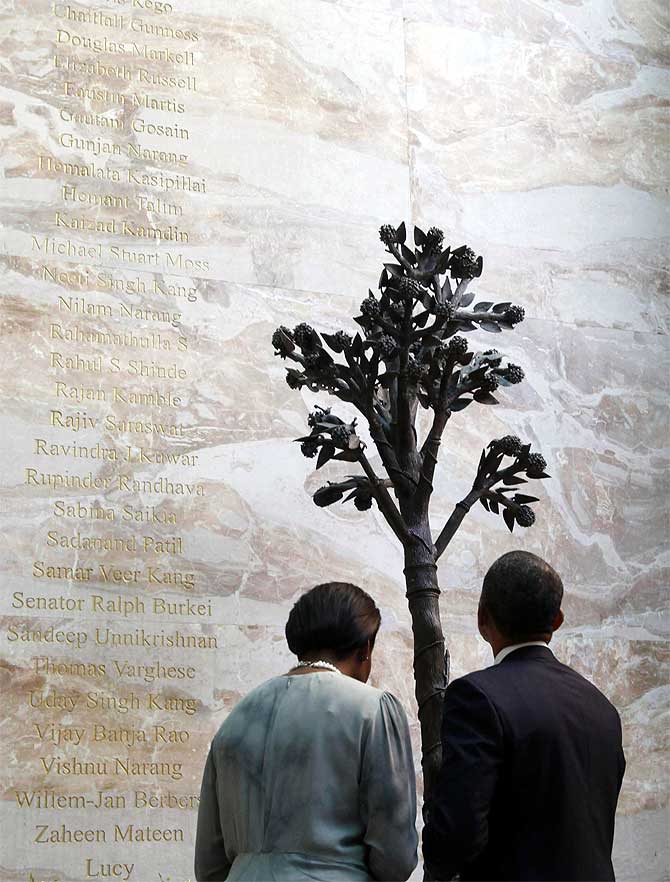
Adrian Levy’s interview with Sheela Bhatt continues…
So, this is a man for who everybody is an opportunity for him. And if you look at that methodology, as soon as he is captured, he is always bidding with the Americans, he is bidding with them — I can give you this, I can get you that, I can take you here; and he ultimately runs out of ammunition.
He gets himself into a terrible situation with a lot of really big consignment of drugs. As I said, when caught he needs to offer something really good to get himself off the hook.
There is a closed court record in America which shows the court is eternally grateful for the cooperation Headley is now giving. And we then see subsequently after that all the other people involved in the drug conspiracy in 1999 answer present sentences in excess of four, five years.
So we know that the deal is done, we know that he is in their employment, we know from people working from the security establishment that he becomes untrusted because he is as yet untested. But very interesting as a proposition is the approach of the American establishment.
We know because Lashkar and elements within the ISI and the Pakistan military were also sceptical about Headley. And pretty much from the beginning believe that he may well be an American agent.
They were being entrapped into becoming involved with something very different; a kind of very adventurous operation they had never done before.
They are very careful about how they push the jihad factory and to take on American, British, Jewish, French, Dutch targets, to make themselves alienated before all of these nations, a very provocative act so there has to be reason.
There were suspicions that Headley was a provocateur from America, from their side too.
Did you meet people from America for this book? Did the CIA and other agencies who interrogated Headley cooperate with your work?
Yes, we talked with some people who had worked with Headley, they have something called the Joint Terrorism Task Force, JTTF, and they bring together into this lots of different elements of the security establishment — from the FBI and from the police and from intelligence services, they form an organisation that can talk.
So we talked to people who served there, we talked to diplomats, we talked to people in Western intelligence, to Lashkar-e-Tayiba, to people in the ISI, to former and serving officers in the Pakistan military, and we talked on the Indian side to people in the intelligence community in India — serving and retired. People who worked on the case as well.
And, lots of varying analysis comes to play afterwards because at the time of the event there is chaos, to be frank. And one of the strongest things you take from here is that a deal was formed and in that deal, the bargain in essence was that America concealed its knowledge, its true knowledge of the growing risk on Mumbai.
It never revealed where the information was coming from. It never expressly explained that it knew how the plot was growing.
But at the same time it passed information to its partners in the Intelligence Bureau and R&AW in the form of bulletins and schedules, and these bulletins consisted of very precise information from 2006 onwards.
As the plot became more fixed, for example, Bombay was decided on as the target almost straightaway to be attacked. That information is fed in 2006.
But also really very quickly it was decided that a marine assault would be done. So that information was passed straightaway.
In which year?
In 2006 and 2007, that there will be an attack by the sea and it will come in the form of afidayeen unit, exactly the same method as used in Kashmir. A kind of ‘swarm attack,’ as they call it in intelligence, where men will land, there will be multiple targets, it will create the illusion of the city burning, but the team will be small and they will choose the sea as the route is unprotected. So that was identified.
Now people will tell you, and the police say all the time, that we never knew about the sea, we could never have guessed — they knew. They knew it was the sea; they knew it was Bombay.
This is the first couple of pieces they were given to act upon. At the same time no one knew about Headley. On the Indian side they were never told. They didn’t know. America concealed the information about him.
And it will become the opinion, later in 2009, of the intelligence services here that America sacrificed Mumbai, in a sense, to keep Headley playing and you may ask why would an ally of India do that?
But phone intercepts and e-mail intercepts maintained by the Americans show that David Headley, when he finally became acceptable to an element of Lashkar, the faction that he befriended was the faction moving to Al Qaeda.
It was the faction that was sick and tired of the old ways of LeT. And instead they were following — do you remember Ilyas Kashmiri of the 313 Brigade, so Ilyas Kashmiri was LeT and then he moved up into FATA?
He was in Waziristan as an affiliate of Al Qaeda with his own 313 Brigade and they attacked Musharraf continually, they set up bombs in Rawalpindi, they became the most vicious insurgents against the Pakistan establishment and the story is that Kashmiri was once part of the army special forces in Pakistan although this is not clear by any means.
But Headley was enamoured with Ilyas Kashmiri and as soon as it became clear through the very open e-mail conversation that they were getting near to each other.
What America could figure out is that this finally was an American with an American passport operating in Pakistan who had access to Al Qaeda.
Now the prime objective of that time was the capture of bin Laden. This is three years before Abbottabad, the only thing that the intelligence agencies were thinking about was how do they decapitate him, how do they cut the head off of Al Qaeda and here was this tantalising, untrustworthy, difficult, hard to control, psychopathic individual, who was American.
‘Every single target in Mumbai was known apart from the Jewish centre’
Last updated on: November 21, 2013 10:28 IST
Adrian Levy’s interview with Sheela Bhatt continues…
I think undoubtedly, what you can see is America’s desire — not all of America — but the desire within certain elements of the American intelligence community, their greed to catch bin Laden meant that they wanted to protect Headley.
Leave him in play, leave him in the field. So they fed tidbits to their friends in the intelligence community in India. They said here is a bulletin. You should know that the tidbits they believed gave a fairly clear picture. But the reality is completely different.
On the other side, in India, they never really appreciated how significant the intelligence was. I know that there was a showdown in 2009, very senior people and the Indian establishment confronted the Americans in Delhi, and said ‘You have betrayed us because you allowed Headley to stay in play, because you were greedy for Al Qaeda, and you have sacrificed Mumbai.’
They made that allegation, using those words. And the response from America was that you were incompetent. We gave you tidbits, we built the picture.
It is shameful on both sides because the narrow self-interest of America meant that they never explained the context for the intelligence, they never really pushed it and foregrounded it as the same argument applies to Western agencies who also picked up details, and on the Indian side, by 2008, they had been given a colossal amount of information.
They knew how many men would be in the team, they knew it would about 10, they knew the method of landing, by dinghy, they didn’t know where, they knew Mumbai was the target, they knew roughly the methodology — RDX explosives, AK-47s — that was in the bulletins, they knew the exact targets.
Every single target was known apart from the Jewish centre in South Mumbai. The Oberoi, Taj, CST-VT, one of the hospitals was named. They also named the Bombay police headquarters as another target and they knew a cluster of Jews would be targeted, but they didn’t know where at the time.
I am sure, I’ve seen the bulletins. So if you actually put this accumulative data together, what you have is a massing threat.
Now the police in Bombay ignored it pretty much because they weren’t given the assistance to develop it. R&AW didn’t seem to develop it, IB didn’t seem to develop it.
What is the reason?
Let us ask them what is the reason? I think it is incompetence. I think there is a political dog fight between IB and R&AW. There is a political dog fight between the state IB node and the Delhi IB node.
I think the police relationship through Special Branch and IB is fractured and both sides don’t trust each other. The police on the ground work very hard. They do the dog’s work.
They work very hard, but they don’t have the resources because in this city of multi-millionaires, where you can build yourself a 27-storey town-house to live in with a helicopter landing pad, no one will pay for the police.
Who will buy their helmets? Who will pay the tax for the vests? And I do think that is the essence of the problem.
The infighting, the lack of seriousness with which they greeted it, until Vishwas Nangre Patil came into office.
He comes into office in June-July 2008 and the first thing he does is, he does a security appraisal. Very young, ambitious officer from the countryside. Not part of the establishment. He is not like (then police commissioner Hasan) Gafoor and Nawab (Rakesh Maria).
He has not come from the same background. He is one of a new breed of country boys who has a lot to prove. Who has gone through the IPS (Indian Police Service). His father is a gym instructor, a weightlifter. He doesn’t have the family credentials.
I think what you see with a man like him is that immediately in the summer he begins to piece together the amassing evidence that Bombay is going to be hit and all of these targets are going to be hit and he begins to organise a committee of junior officers he meets regularly in the evenings, looking at how to deal with the pitiful resource system and make the city safe.
He goes and addresses the general managers of the hotels and says that you are gonna get hit. And in fact he is even more precise than that, he delivers through September and October (2008), incredibly detailed information to those hotels, particularly to the Taj. He forces his way though the door, takes on the Tatas.
Very brave decision, young officer taking on influential corporations like the Tata family. And he gives information saying that this is a folly, we can’t give you the date. We don’t know which date this is going to happen, but you are going to be attacked.
And then after the attack on the Marriott Hotel in September 2008 in Islamabad where 50, 60 people were killed with a truck bomb, he goes back to the hotels and says it is gonna happen. You are going to get hit now. Look, they have done that because the jihad factory is turning against the establishment and we will get hit too.
He writes up a report that he sends to Gafoor, it is a superbly detailed report, and in it he itemises all the things that must be done, shutting all the doors of the Taj, creating checkpoints in the hotel, having a full-time police picket on the Taj’s roof by the opening doors.
A whole transformation of the way the hotel perceives itself. And the hotel agrees to some of these changes, most of them it is forced to agree.
Patil goes away on leave, and when he comes back, all the changes have been dismantled. And the hotels complain that the cops are greedy. They want to be fed. And it is unsightly having them hanging around begging for food. And all the doors are opened again.
There is no checkpoint, there are no snipers, there is no blast barrier, the CCTV is disorganised, there are illegal alcohol storages still kept all around the hotel.
These are issues, if you want to ask who did the work, the local police in the end
tried. People like Vishwas Patil and Rajwardhan Sinha, he was in the Special Branch. They would be ultimately the only people who fought for the safety of the hotel.
Sinha is remarkably insightful and a battle-hardened officer. He spent his time in Gadchiroli (the Naxal-infested tribal area of Maharashtra). But here you have a disaster in the brewing.
Intelligence services that don’t take intelligence services seriously. Establishments that believe in creating excuses…
Why are we like this?
Why are we like this? I have no comment to make. I think this is a matrix where narrow self-interest from the West meets dog fighting in the subcontinent. And that is what happened.
===================================================================================================
— For further information, please visit http://irsme.nic.in
