Kashmiri Pandits: Grappling with the questions of cultural identity and creativity in exile
S. S Toshkhani
| C |
an the present state of the forcibly exiled community of Kashmiri Pandits, be described as a threshold of emancipatory subjecthood? Have they after centuries of subjugation and suppression arrived at a stage in the battle for their destiny where they can envision a kind of future on the basis of self-agency and self-understanding, despite being dispossessed and dislocated, historically marginalized and stereotyped? They have never been able to speak from the position of subjectivity ever since their encounter with Islam in the 14th century, but pushed into a hyphenated existence with the dominating community under whose hegemonic religious identity they had to let their selfhood subsumed as an uneasy compromise, accepting it as the regional identity of their millennia old homeland. Has the time come now when they could throw away the burden of the hyphen? Or, are they still unable to shake off their pre-exodus hang-ups – a people culturally adrift and intellectually wandering in a vacuity of mind?
These are some of the questions that come to my mind as I look, not as a remote witness but as a sufferer of the agonising tensions unleashed by the condition of exile, at how the community has responded to the realities of the situation, politically and culturally. And though I think it is impossible to talk about the fate of the people pretending as if the history of the past seven hundred years had simply not taken place, one has to allow the “dynamics of continuity and change” also to play its role. Viewed from this perspective, exile also allowed the moment of the departure from the Valley to become the moment of rupture between the history of the present and history of the past for the exiled Pandits. Thrown out of their natural home, it gave them an opportunity to come out of their state of long-drawn stasis and set on the path of self-discovery. “Belonging nowhere and everywhere at the same time”, to borrow a phrase from Hindi writer Susham Bedi, they now had to “reveal themselves to themselves”.
I have said this only to establish the historicity of their present dislocation as a watershed. It would be worthwhile to note how they tried to trace the historical, cultural and psychological boundaries of their post-exodus identity through questions like “who we are” and “why we are here”, after having lost their geographical positionality as Kashmiris, and how this quest for their real self found intellectual and cultural expressions. The exodus of Kashmiri Pandits from Kashmir in the early 1990’s was a cataclysmic event, a human tragedy of massive proportions reminiscent in several ways except perhaps scale of the country’s partition in 1947. Associated with it were heart-wrenching scenes of massive dislocation of hundreds of thousands of terrorised people fleeing for their lives after being rendered homeless in ruthless genocidal attacks by highly frenzied groups of Jehadi insurgents who wanted to snatch Kashmir away from Indian hands for Pakistan and make it a “pure Islamic land”. For the already disempowered and marginalised Pandits, it was an overwhelming experience, the shock being made further unbearable by the cruelty and apathy of the Indian state to which they had looked for protection.
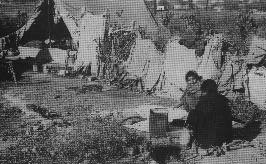
How many people know that in 1947 as well hundreds of Pandits had been turned into refugees and forced to live in camps in the suburbs of Srinagar for a long time when Afridi tribals sent by Pakistan to invade Kashmir had devastated Baramulla, Uri and other towns? Thousands of Pandits and Sikhs had lost their lives as the ferocious tribesmen swooped upon these towns unleashing untold barbarities in the shape of brutal killings, loot, rape and arson, and thousands had fled. The story has been deliberately pushed under the carpet and never found a mention in the dominant narratives of Kashmir. However, I am not going to repeat the story of 1947 here as that is not the point I intend to make. What I want to draw attention to is that the history of dislocations of the community goes back to centuries with memories of ethnic cleansing, holocausts, genocides, religious persecution and suffering etched on their collective memory as a deep scar, but hardly finding any mention in the dominant narratives of Kashmir or ignored to bail out the perpetrators. This time over too, the same shameful drama was replicated in a manner more brazen than ever before with attempts to even implicate the victims themselves in their own extirpation.
The artist Veer Munshi very poignantly captured some years ago scenes of the exodus of the Kashmiri Pandits on his canvas in all its pathos. In a series of very compelling paintings, of which he held an exhibition in New Delhi, he showed the refugees arriving at their new destinations with expressions of bewilderment, pain and anxiety on their faces. The exhibition had a tremendous impact and it catapulted him to fame almost overnight. “Exile is one of the saddest fates”, as Edward has said, and the Pandits were trying to come to terms with all that it meant, unable to believe that the tragedy which had befallen them had not shaken the conscience of the heedless ruling powers and the indolent political class of India. Nor were the so-called “intellectuals” of the country, especially those of the left-liberal variety, who are prone to organizing protest rallies and candle light vigils in sympathy with victims of some perceived act of injustice in some obscure corner of the world at the throw of the hat, moved. The world that was theirs till the moment of departure had come down crashing upon them and they were left alone to gather its shattered pieces. They had no one’s but their own shoulders to cry upon. Haunted by memories of a paradise lost and of the horrors of the harrowing times they had been through, the Kashmiri Pandit refugees were beginning to realise with great anguish that they had become a people without an address.
An entire community had been dislodged from its habitat, an entire way of life was under threat of extinction and yet who cared. The government at the centre was engaged in creating a smokescreen of so-called secular rhetoric to hide their callous indifference towards the Pandits and their sneaking sympathy for their tormentors – the Islamist terrorists who wanted to dismantle not only Kashmir’s links with India, but the very idea of India. Among those who left Kashmir were the cream of Kashmir’s intellectual world – writers, artists, scholars, academics, journalists, engineers, architects, doctors, political analysts, media persons, theatre workers, musicians and others. Many of them had made noteworthy contributions in their respective fields of creativity and won fame even outside the boundaries of the state and in some cases even outside the country. And now they were out on the dusty lanes and streets of Jammu and Delhi and of other big and small towns and cities of the country, wandering as refugees, inconsolable in their disbelief and disillusionment. The Valley was drained of the sap that energised its creative and intellectual life, but not a word of regret or remorse or sympathy escaped the lips of their counterparts who stayed behind.
This may appear to be a bit too long introduction to the subject I want to mainly focus upon in this discussion — the way Kashmiri Pandits had to grapple with the very basic anxieties of identity even as they were battling for physical survival in a course of events dictated by terror. The scene immediately after exodus was dark and chaotic with the loss of geographical location leading to a stinging sense of cultural loss, the gloom being further exacerbated by the refusal of the Indian political and the intellectual classes to understand their suffering with any level of sensitivity. Groping for a political vision and idiom to articulate and contextualize their struggle, the Pandit intellectuals felt for a long time choked by this conspiracy of silence. In Delhi as well as in Jammu they huddled in groups in coffee houses and other meeting places to think of strategies to respond to the crisis. In fact, the perennial moment of crisis itself seemed to have become a constituency from where they could address their concerns and launch their search for alternatives.
In New Delhi, the newly opened Coffee Home at Baba Kharak Singh Marg, where a cup of coffee was still available at an affordable price, became a temporary address for Pandit intellectuals who gathered there for almost interminable sessions of discussions on the prevailing political situation in Kashmir which was burning as a result of the government’s inability to deal with the insurgency beset by its tendency to hug illusions and refusal to understand the real ideological basis of the insurgency . The killings were still going on in the Valley and terror attacks had paralysed day to day life, while the centre’s policy of abject surrender before and inexplicable appeasement of the so-called the “alienated youth”, for whom the political class and the media with their woolly notions and warped perception of things had a sneaking sympathy, was making things worse. Bitterly upset over their criminal blindness towards the brutalities suffered by the Pandits, the community’s intellectuals could be seen bent over their coffee cups, fretting and fuming and grinding their teeth. The deep sense of insecurity and a fear of permanent dislocation that this attitude left in the Pandits’ minds were naturally too often reflected in these discussions. Surprisingly, the most volatile among those who participated in them were the erstwhile Marxist ideologues of Kashmir like Brij Lal Kaul, Prof. M. L. Raina and Pran Nath Jalali who had played a significant role in the State’s politics. Even Comrade Someshwar, who had introduced the communist movement in Kashmir, also showed up at times. Of these Brij Lal Kaul, one of the staunchest and most active of Kashmiri leftists, had even gone to jail in support of Sheilkh Abdullah’s political movement against the Maharaja. It was totally difficult for one familiar with their political past to believe that a whole lot of these stalwarts, brilliant intellectuals as they were in their own right, swing from extreme left to a totally extreme (pro-Hindu) position almost overnight, disillusioned and disenchanted by the political upheaval brought about by militarised Islamists in Kashmir. All, except a few, like Pran Nath Jalali for instance, who adhered to their basic ideological commitments to the last, even though their sympathies for once were doubtlessly with the dislocated and suffering community to which they belonged. These erstwhile comrades and commissars had realised it the hard way that their gods had failed and failed miserably.
The community intellectuals realised that the condition of exile or exodus was a prolonged condition of pain and alienation and that their role in this hour of crisis was to intervene effectively against the dangers of extinction and deracination and to create an awareness of the importance of preserving and protecting the common bonds that define the community’s identity as a distinct ethnic and cultural entity. A sense of shared history and traditions as well as the peculiar sense of values and ideals “determines the deepest part of our consciousness” as does “identification with other levels like race, culture, religion, language and culture”, Prof. Daya Krishna has pointed out. Identity is also a production of “historiographies of differences”, and it is identity in difference that Kashmiri Pandits could justifiably celebrate for the first time in centuries, even though in exile. They could note to what extent it has been modified and influenced and what represents its true core reflected in civilizational continuity through long stretches of time, the source of its inexhaustible dynamism and vitality. They could also strive to understand questions of identity in terms of the breaks in the civilizational continuum it has had to suffer after their 14th century encounter with Islam. But the compromises they had been forced to make during their prolonged co-existence with Islam had severely conditioned their minds making it rather difficult for them to reflect on their condition in this perspective.
Some Kashmiri Pandit writers and political activists had gone as far as not just denying but effacing their own social identity as Pandits in their writings and allowed the dominating community to subsume it under their religion-based hegemonic perspective of Kashmiri identity. Most of them were of course the left-leaning progressive writers guided by the political agendas of their party. They included even top poets and writers like Dina Nath Nadim, whose writings invariably had Muslim persona as protagonists typifying Kashmiri masses. (Nadim’s short story ‘Jawäbī Khat’ and poems like ‘Mye Chham Āsh Pagǔhǔch’ are two clear examples of this tendency). Most of the progressive Pandit writers toed this line. That some sort of a communal divide was virtually enforced by some Muslim writers in the literary field, in spite of this self-effacement by Pandit writers, so far as assessment or recognition of literary merit was concerned and even an oxymoronic Muslim Communist Party was momentarily floated, leaving Nadim bitterly disillusioned and disenchanted in the latter days of his literary career, is another story.
However, the restlessness to recognise their real self as different from the binaries through which they had always been presented had begun to exert pressure on the minds of the Pandit intellectuals. Breaking away self-consciously from the notion of the so-called composite culture in which they held the peripheral space, the Pandit intellectuals began to strongly feel the need for a self-definition of their community to identify its cultural and ethnic distinctiveness. But the issues they had to address as representatives – every Kashmiri Pandit thought himself to be one– of the struggle of this disadvantaged and unrepresented and now dislocated and silenced part of Kashmiri population to preserve and validate its identity were complex and numerous. Perhaps the most crucial issue they had to encounter was that of the conflict between memory and counter- memory, continuity and change, for the fear of their extinction as a definite ethnic and cultural entity was real and fearfully looming large over their heads. Engaged in a grim fight for physical survival for which economic betterment was necessary, the psychic predicament of these victims of terror called for immediate cultural imperatives for ensuring continuity. Mighty anti-memory forces were at work to divert their gaze from the centrality of the issue and push them into a state of perpetual cultural amnesia. To snatch back identity from the jaws of these forces was no easy task. The objective of these forces operating in the historical circumstances in which the dislocated Kashmiri Pandits were placed was to annihilate an entire ethnic identity without any compunction. The situation had been made all the more complex by the intervening seven centuries of subjugation and conditioning and also the vast geographical spaces that now separated them from the place where the civilization that had shaped them had taken birth.
Empty shibboleths of Kashmiriat and composite culture have been floated to prevent them from asking questions of history and to discover their true selfhood. The dubious chronology of Kashmiriat made the 14th century, when Islam came to Kashmir, as the referral point of for the development of a distinct Kashmiri personality and the sole determinant of various aspects of identity and culture when actually this date represented a break in a continuity that encompasses millennia in its sweep. The study of history opens up wounds that point to forcible attempts to undermine the indigenous cultural and intellectual traditions and make access to a past spanning more than five thousand years problematic. It is impossible to define the constitutive elements of Kashmir’s cultural identity without visiting and reclaiming this indigenous past. You cannot erase or repress memories of this past and talk of regional distinctiveness on the basis of alien intrusions and implants which are not at all in consonance with the original civilizational matrix from which the basic ideas and concepts that have shaped the Kashmiri mind have emanated.
Sad though it is, it must be acknowledged that Kashmiri Pandits themselves have almost forgotten their links with this matrix even though there is an urge in the minds of some of their post-exodus intellectuals to somehow access it. They have abandoned Sanskrit without understanding its importance in the larger process of continuity and have lost sensitivity to their cultural roots which can thrive only if they are nourished by cultural memory. There must be hardly a handful among the large number of intellectuals, scholars, writers, academics, artists, researchers, cultural activists, journalists, political analysts, professionals etc., now constituting the Kashmiri Pandit post –exodus diaspora, who really took the cultural dimension of the crisis of identity faced by their community seriously enough, though everyone around could be seen talking about it. Nor could they understand the creative mechanism through which diverse aspects of cultural memory act to preserve the identity of a people. They responded to the issues related to their cultural predicament at best through the politics of “who we are” and “where we come from”, but felt out of breath when required to go out into the depths. Identity in the cultural context was perceived by quite a few among the community’s leaders – and who did not claim to be one—at best as “a role or costume that could be put on as a matter of theatrical performance”, or else something related to the continued popularity of Kashmiri Pandit cuisine – dam olū, nadǔry Yakhǔny, muji chetǔny, rogan josh, kạliyǔ and other mouth –watering vegetarian and non-vegetarian dishes — outside Kashmir.
The unfortunate fact is that today Kashmiri Pandits’ capacity to understand and interpret their own cultural and religious traditions, not to speak of their ability to confront and correct the massive distortions and disinformation, half-truths and total lies deliberately unleashed by anti-mnemonic forces about political and cultural history of Kashmir, is not of the desired level. Their reputation of being a highly intellectual community is suffering as they have exposed themselves to the charge of being disinterested in matters other than economic survival. Far from being a people of highly elevated status because of their wisdom and sophistication, as they were reputed to be, they are in the actual danger of becoming a community with low cultural literacy, the epithet “Kashmiri Pandit” tending towards becoming almost a misnomer. One of the main reasons responsible for this sad state of affairs is the constant depletion in the ranks of scholars steeped in Sanskrit studies and traditional lore. Today there is no one of the stature of Pandit Madhusudan Kaul Shastri, Pandit Govind Kaul, Pandit Ishwar Kaul, Pandit Mukund Ram Shastri or Pandit Anand Kaul to whom the disoriented and highly confused people still called by the name of Kashmiri Pandits could look for guidance. By the time the exodus took place the community had already lost stalwarts like Prof. Kashi Nath Dhar, Prof. J. D. Zadoo, Prof. S. K. Toshakhani, to be followed by the great Shaivite master Swami Lakshman joo and profound Shaiva scholars, Prof. B. N. Pandit, Prof. Janaki Nath Kaul Kamal and Prof. Nilkanth Gurtu. The versatile Prof. P. N. Pushp also departed in the first decade of the exile. This has left hardly anyone of their standing and authority who could engage with paradigms of identity in terms of cultural realities and bring back the community from the abyss of ignorance and forgetfulness into which it seems to have fallen. An amusing instance of this is the increasing phenomenon of ‘mahāyagnas’ and ‘havans’ having become the only thing happening in name of “cultural activity”. On the other hand even common rites and rituals or samskāras which are an essential part of traditional Hindu religious life are being almost totally forgotten by most diasporic Pandits. The yagna comes handy to hide one’s lack of knowledge of ritual practices, for to hold it the organizer has to do little else than hire the services of a functional priest – a clan whose numbers have dwindled fast in the years of the exile – and allow him to recite the mantras with the huge community gathering offering the last oblation (antim āhuti) into the sacred fire and enjoying the “nạvīd”.
In the meanwhile exile, or diaspora as one can call it, has gone generational. An entire generation of young Kashmiris, most of them born outside the paradise which their parents have lost, has come up wanting to know about their true being, their heritage and history, and asking questions for which there is nobody to provide answers. With those who could have the knowledge and clear understanding of the roots and origins of the civilization with which a Kashmiri Pandit can naturally relate, those who can recall and pass on the memory of the historic past in which that civilization was embedded to the present diasporic generation, being no longer available on the scene, how will it be possible for them to comprehend the defining point of their identity? Most of them are young and intelligent and have a strong feeling of being exclusively Kashmiri, but without having similar living experiences of it as the older generation. They have not had to struggle with an overwhelming nostalgia as their parents have, as not many among them have memories of living in Kashmir before and after the exodus. The question arises what does their assertion of being Kashmiri mean in the present circumstances of exile with Kashmir having become more of a psychological than physical location for them?
Another closely linked question that can be asked is whether this assertion could imply a rejection of their mainstream Indian identity? My conversations with many young Kashmiri Pandits residing in Delhi and near about revealed that they do not see any contradiction between the two as the mainstream Indian identity has their ethnic identity as one of its constituents. Kashmir for them remains the idea of home, even if they do not live there, and being Kashmiri also connotes their allegiance to the greater idea of Indian nationhood. They are proud, as they told me, to invoke Kashmir as a part of the Indian civilzational continuum. They, however, painfully admit that they do not have a clear and coherent picture of historical and cultural realities, laying the blame for the gaps in their perception on the older generation which has been unable to pass on to them much relevant information in this regard owing to their poor knowledge and forgetfulness of matters related to cultural identity . I would like to quote well known philosopher Prof. Daya Krishna here who says: “…There can be little doubt that no understanding of history will be possible without the continuity involved in the notion of the preservation of memory of the past in the present and its prolongation and perpetuation into the indefinite future. The history of a culture, therefore, has to be seen in terms of what it continuously tries to preserve and pass to successive generations, and in terms of which it prides itself or tries to build a positive image of itself.” (Daya Krishna: Prolegomena to any Future Historiography of Culture and Civilzations).
True, the Kashmiri Pandits have been dislocated from the spatial locus “that constituted the natural frontiers of their cultural habitat”, forcing them into situations in which “ruptures leading to erasing of markings becomes inescapable, it is only by comprehending the essential meanings of a culture and articulating it in terms of the values it represents” that they can meet the challenge of preserving their identity. Language is one of the most important markers of identity about the loss of which they are articulating their anxiety with a sense of increased desperation. Language of course is an important part of identity discourse for it “situates us in the core reality of our being”. But what is happening in Kashmir today is that Kashmiri is struggling to save itself from the extinction because of the threat of severe erosion it faces to its linguistic ecology. Its misfortune is that its own speakers in the Valley are trying to kill it by mutating its original nature. The language is being put to political use “for subverting an emplaced culture and substituting it with a sub-culture”, says Shantveer Kaul, a well known Kashmiri Pandit intellectual. People, he says referring to various stages of de-contextualisation of Kashmir language taking place in Kashmir, “were encouraged to use Persianized or Persian equivalents for legitimate Kashmiri words”. The fact is that evolved from Sanskrit through the intermediate Prakrit and Apabhramsha stages, Kashmiri today has been so heavily laden with Persian and Arabic words and expressions that its real identity has become unrecognisable. What is greatly disturbing is that in the madness to delink it from its Sanskritic matrix even popular Kashmiri usages are being deliberately made obsolete. Instead of using Kashmiri stems and suffixes to coin new terms, wholesale borrowings from these languages has resulted in total depletion of “content words” in Kashmiri at the literate level.
There are many dimensions and aspects of the question of language and identity for the displaced Pandits. Dislocation is not a mild experience of democratic option but a brutal blow leaving little for one dissociated from one’s moorings to choose from. The displaced Kashmiri creative person choosing to write in Kashmiri still looks to the Valley to get recognition, even though some excellent exile writing in Hindi and English in the recent years has started to catch the attention and imagination of a wider pan-Indian audience. In Kashmiri the readership available can literally be counted on fingers even in the Valley. The problem of script has also not really eased much even though a large section of Kashmiri writing is now done outside Kashmir in a modified Devanagari script. The attempt to get Devanagari recognised by the HRD Ministry some years back as an additional optional script for Kashmiri raised a furore in the Valley with some Muslim Kashmiri writers describing it as a “sinister move” and “an attack on Kashmiri culture”. The move was immediately withdrawn with the ministry buckling under pressure from these elements, staying put the hopes of émigré Kashmiri writers writing in Devanagri to win anything like a Sahitya Akademy prize. These opponents of Devanagari ignored the fact that all the early literary works in Kashmiri were written in the Sharada script, with the Krama school of Kashmir Shaivism encouraging the emergence of Kashmiri as the regional voice of literary culture in Kashmir. Another question that arises in area of language is about the evaluation of the literature churned out by the displaced writers. Who will determine the quality and standard of their content and style, literary criticism being almost a non-existent genre in Kashmiri literature even in the Valley?
For the exiled Pandits, however, Kashmir remains as the idea of home, there being no home away from home. The young among them born after or a little before the exodus who want to know about their true being, their heritage and history have a myriad of reasons to be proud of their Kashmiri Pandit identity, for it is their ancestors who gave Kashmir its name and creation myth. An intellectually forward -looking and aesthetically sensitive people whose ever creative and innovative genius “brought great enrichment in wide ranging areas of art and thought”, they contributed immensely to the development of peculiarly Kashmiri sense of values and ideals and also in the core areas of Indian cultural and intellectual traditions ranging from philosophy, aesthetics, folklore, literature, architecture, historiography, grammar and philosophy of language to subtleties of logic, mural and sculptural art, medicine and a host of other enterprises.
