यह देश का दुर्भाग्य है की कोंग्रेस भरष्टाचार से खोयी हुयी लोकप्रियता देश को बेच कर प्राप्त करना चाहती है. इस लिए देश को बाँटने के सब तरीके अपना रही है. किसी राज्य के मुख्या मंत्री को मरने के षड्यंत्र को एक चुनाव जीतने का मुद्दा बना रही है. अगर लश्कर नरेन्द्र मोदी की हत्या करने मैं सफल हो जाती तो क्या देश का भला हो जाता. किसी देश से आतंकवाद समाप्त करने के लिए कड़े कदम उठाने पड़ते हैं . इशरत पाकिस्तानी अगेंतो के साथ थी. उसकी हत्या यदि करनी भी पड़ी तो क्या पंजाब व् बंगाल मैं ऐसे अनेकों केस नहीं हुए थे . क्या हम पुलिस को सदा के लिए निष्क्रिय नहीं कर रहे. यह प्रश्न देश के दूरगामी परिणामों के देख कर लेने चाहिए.
परन्तु चुनावी वर्ष मैं सद्बुद्धि का लोप हो जाना दुर्भाग्यपूर्ण है पर आश्चर्यजनक नहीं है.
निम्न लेख लिंक पर पढ़ें
Dangerous logic
The way in which an assassination attempt against a top leader is sought to be dismissed speaks of an unconscionable irresponsibility.
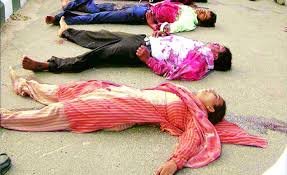
What does one make of the selective leaks and the motivated reportage in sections of the media on the Ishrat Jehan case? It is fairly clear there is a systematic and downright political attempt to implicate Narendra Modi, the Gujarat chief minister, in still further controversy, without the legal case necessarily getting anywhere.
The evidence cited — one accused turned witness turned would-be approver, having allegedly heard another person refer to two people with beards and then concluding the reference was to Gujarat’s chief minister and home minister Amit Shah at the time — is scarcely compelling. It is not going to convince anyone other than the usual suspects in television studios. If courts began pronouncing judgments on such hearsay and allegedly overheard loose talk, three-fourths of Parliament would have been behind bars by now. Second, it is not even as if the Union government, the Central Bureau of Investigation and the chosen media outlets are running a conscientious campaign against police actions that are alleged to be fake encounters. It is nobody’s case that these don’t exist and don’t happen. They do, in India and elsewhere, and in principle, each such case is one too many. In 2012, the National Human Rights Commission told the Supreme Court that there had been 191 proven fake encounters all over the country in the past five years. By one reckoning, there have been some 400 alleged fake encounters in this period. These involve a variety of state governments, cutting across parties. It is a fair suggestion that some sort of inquiry needs to be conducted into the culture of fake encounters in India and the reasons some policemen actually advocate them. The failure of the criminal-justice system to deliver quick convictions and in some cases of the courts to resist pressure — this happened in Punjab in the 1980s and 1990s — have often been cited. Fake encounters may be a frustrated, short-term response to such lacunae, but cannot be a long-term solution and certainly cannot be welcomed as part of everyday policing and criminal justice. Yet, it is not as if those 191 cases — or 400 cases, depending on which number one fancies — are the subject of public activism or that politicians and police officers from several states are being targeted. The indignation is decidedly selective and limited to one or two cases in Gujarat. Logic is being stretched to suggest the chief minister and home minister fabricated an Intelligence Bureau report, masterminded the kidnapping of four innocent citizens, got them killed and pretended it was all part of defeating an assassination plot. This conflation of bazaar gossip with a rigorous legal process will continue till the 2014 elections, unless the CBI and its current leadership suddenly — and perhaps equally expediently — discover there is no case at all. In the interim, the episode would have had its consequences. When spoken to, officers of the IB are blunt in admitting the mood in the organisation is angry and sullen following what the IB feels is an attempt to frame a senior official. An input of a Lashkar-e-Tayyaba assassination squad, comprising Ishrat Jehan and her accomplices, is being sought to be rubbished as made-up. An entire mythology of how the officer in question was close to Mr Modi across several years and several postings in several locations is being planted on whichever media practitioner is willing to play unquestioning stenographer. An officer on the verge of retirement is finding his entire career and reputation tarnished and mocked, without giving him an opportunity to answer. The point is if this officer was such an unrepentant, bigoted crook how did he go this far in the Indian Police Service? How was he given due promotions? How were his annual confidential reports unaffected? Alternatively, is it the case that his career was picture perfect till Mr Modi became a contender for national office and then he simply fell by the wayside, as collateral damage? In the IB, they are not asking these questions; they have already drawn their conclusions. The issue goes beyond merely a battle between the CBI and the IB or even the prospects of individual officers. The manner in which a major assassination attempt against a top political leader is sought to be mocked and dismissed — despite the LeT embracing Ishrat Jehan and her accomplices as its “martyrs” in the days following their killing — speaks of an unconscionable irresponsibility. That the Congress, which has lost two Prime Ministers to assassinations, can resort to such methods makes it all the more unfortunate. Consider an analogy. On October 31, 1984, Indira Gandhi was shot by two of her bodyguards. One of the assassins, Beant Singh, was gunned down within minutes by commandos of the Indo-Tibetan Border Police (ITBP), a paramilitary force that was part of the security arrangement in the outer perimeter of the Prime Minister’s house. By all accounts Beant Singh and the other assassin, Satwant Singh, put down their weapons after Mrs Gandhi fell to the ground. So why was Beant Singh shot? It would stand to reason that ITBP soldiers lost their heads and took recourse to an extrajudicial act (firing upon somebody who was in all probability not armed). Was this an encounter death? What if somebody now says the murder of Beant Singh was a cover-up to hide some political conspiracy? What if the same coloured camera the Congress and its propaganda auxiliaries are deploying in Gujarat is used as a prism with which to cast a post facto glance upon the events of October 31, 1984? What if somebody demands an inquiry into the exact circumstances of Beant Singh’s death and the identification of the individual commando whose bullet killed him, and asks for clarity on whether Beant Singh was armed at that stage or was murdered in cold blood? It is nobody’s case that any political party should take recourse to such gimmickry. It stands to reason no wider conspiracy was being masked by Beant Singh’s death and it was only the response by an ITBP posse in the heat of the moment. This should not obscure us from the larger tragedy of a Prime Minister’s assassination and the security gaps it revealed. In New Delhi, the Congress would find this logic extremely persuasive. What happens to it in Gujarat?
