
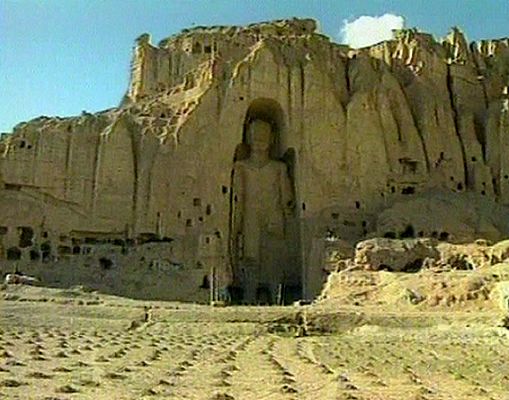
म्यानमार मैं मुस्लिम व् रोहिंग्या की लड़ाई अब बोध गया मैं भी आ गयी . बोधगया की आतंकवादी घटना का किसी विदेशी घटना के बदले मैं किया जाना एक नए आतंकवाद के मापदंड को दर्शाता है. अफगानिस्तान मैं बामियान बुद्धों की मूर्तियों को तोड़ने वाले अपने कुकर्मों को भूल गए . you tube video link is given below.
<iframe width=”480″ height=”360″ src=”//www.youtube.com/embed/xYYBlPWYb7Y” frameborder=”0″ allowfullscreen></iframe>
यह तो एक दादागिरी है . हम चाहे जो मर्ज़ी करें , कितने ज़ुलम या अत्याचार करें पर हम पर कोई ऊँगली नहीं उठा सकता.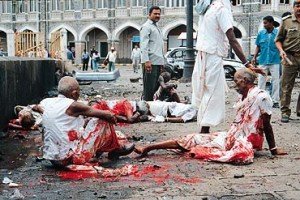
फिर भारत मैं विदेशी घटनाओं के बदले भी आतंकवादी घटनाएँ होंगी और देश से सम्बन्धी भी. कश्मीरी पंडितों के अत्याचार पर कुछ मत बोलो पर बोदोलैड का बदला लेंगे.
देश को गंभीरता से इन पहलुओं में दूरगामी परिणामों के बारे मैं सोचना होगा. 
श्री प्रिय दर्शी दुत्ता के लेख को निम्न लिंक पर पढ़ें
http://www.niticentral.com/2013/07/08/islamists-strike-back-at-buddhists-100794.html
Rohingya conflict comes to Bodh Gaya
By Priyadarshi Dutta on on July 8, 2013
The perpetrators of low-intensity serial blasts in Mahabodhi Temple in Bodh Gaya are still to be identified. But it appears to be a retaliatory act by Indian Mujahideen (IM) to avenge the anti-Muslim violence in Burma. Last August, a bunch of skull-capped Muslims had run riot in Lucknow over violence against their coreligionists in Buddhist Myanmar. They publicly damaged a statue of Buddha installed in a park. The Uttar Pradesh Police was conspicuous by inaction.
Buddhist-Muslim conflict in Myanmar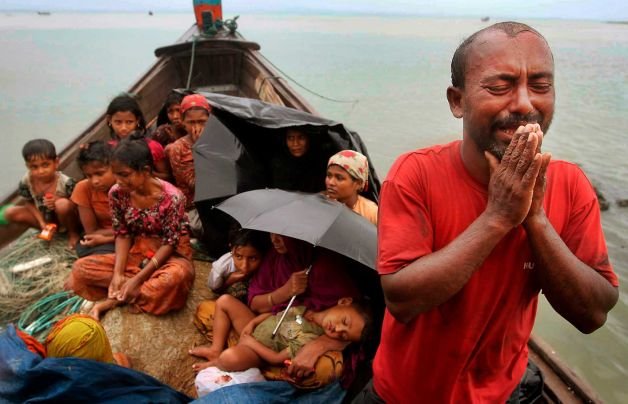
There had been escalation of anti-Muslim violence in Myanmar this summer. The western coastal State of Rakhine, historically Arakan, is the focal point of this Buddhist-Muslim conflict. Rakhines, who are Buddhists, accuse the Muslim Rohingyas of plotting to destroy Buddhism and overrun Myanmar. They say the number 786, venerable to Muslims of South Asia, adds up to 21. Buddhists have an occult fear that Muslims would overrun Myanmar in the 21st century. To counter it, the Buddhists have come up with a number 969, which represents the ‘three jewels’ –Buddha, Dharma and Sangha. The number is said to have its origin in a book written in the late 1990s by U Kyaw Lwin, who worked in the Ministry of Religious Affairs. But nowadays it has come to represent a Buddhist mass movement against Muslims. It is led by Gana Wasak Sangha, a religious order in the Mon State of Myanmar.
The numerological shadow war represents centuries old bad blood between Buddhists and Muslims. Arakan is a coastal strip, geographically segregated from the rest of Myanmar. As a feudatory of the Bengal Sultans in the medieval era it was exposed to Muslim influence and settlers. “The kings of Arakan”, says Aung San Suu Kyi in her eminently readable Freedom From Fear, “used Islamic titles, although they and the majority of their subjects remained Buddhist. However, there are more people of the Islamic faith to be found in Arakan than anywhere else in Burma. Despite these Bengal and Islamic influence, however, Arakan has been a predominantly Buddhist region for centuries.”
The feared increase in Rohingya population
But the Buddhist domination is slipping away. The Rohnigya population, following the universal Muslim trend of higher fertility, is believed to have crossed halfway mark in Rakhine State. This is despite the fact they were stripped of citizenship in 1982, disenfranchised since 1974 and prohibited from joining the army since 1948 after Burma gained independence. Some 250,000 Rohnigyas were pushed into Bangladesh in 1978 by the Ne Win Government. A repatriation agreement was signed between Bangladesh and Myanmar between in 1992. Bangladesh tricked lakhs of unwilling Rohnigyas to return to Arakan. The Rohingya issue, on balance, remains a hanging fire. Last year’s violence generated fresh rounds of Rohingya refugees.
In 1994, a maximum-two-child policy was imposed on the Rohingyas. The policy was recently re-imposed after it had been allowed to lapse. Aung San Suu Kyi, now the Leader of Opposition in Myanmar, has criticised it as inhuman. But she is not really a lover of Muslims, unlike the Indian secularists.
Rohigya refugees in New Delhi
In 1989, when the Junta officially renamed Burma as Myanmar and Rangoon as Yangon, Indians were clueless. Many in north India, following the Hindi pronunciation, thought it meant ‘Mian Maar’ (kill Muslims). Muslims of Myanmar spilling over into India is the last thing we would want. Only last year it was discovered that 2000 Rohingya refugees had pitched tenets before UNHRC office in Vasant Vihar in New Delhi. They had earlier been living on the fringes of Vasant Kunj from where they were evicted by efforts of the RWAs and Gram Sabhas. There was no credible answer from then Home Minister P Chidambaram on how they reached New Delhi by infiltrating into India. The Capital shut its doors on Rohingyas, but they are likely to be living elsewhere in India with the complicity of the UPA Government.
In the medieval ages, Islam had overrun vast swathes of land where Buddhism flourished, including Afghanistan, Sindh and Kashmir. The Bodh Gaya temple in Bihar, like the University of Nalanda, was razed to ground by Muslim invaders. With Islam striking back, the Buddhists have decisively entered the clash of civilisations. But the symbolic beginnings of this conflict were made in February, 2001 when the Bamiyan Buddhas were turned to rubble by the Taliban in Afghanistan. The Buddhist world thought it was too far away to be touched. Now they might have to revise their opinion.
