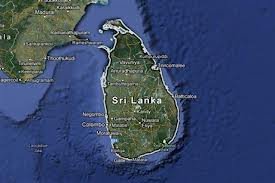
 डा एस आर राव के अनथक प्रयासों से सरस्वती नदी व् कृष्ण की द्वारका खोजने मैं बहुत प्रगति हुयी है.परन्तु राम की लंका अभी भी पहेली ही बनी हुयी है. हनुमान , अंगद के समुद्र को छलांग से पर करने की कथा और बाद मैं समुद्र पर सेतु बनाने की कथा तो आज के श्री लंका ही के राम की लंका होने की ओर इंगित करते हैं परन्तु विशषज्ञों का यह मानना है की लंका कहीं और थी . कुछ उत्तर भारत मैं डा राव सरीखे लोगों की भी कमी है . नहीं तो क्यों कोई बड़ी एजेंसी रामायण के स्थानों की खोज नहीं कर रही .
इस लेख मैं लंका खोजने मै वैज्ञानिक कठिनाइयों का वर्णन है .
कृपया लिंक पर क्लिक कर पढ़ें .
http://www.academia.edu/516826/LANKA_OF_THE_RAMAYANA_THE_PROBLEM_OF_LOCATION
LANKA OF THE RAMAYANA:THEPROBLEM OF LOCATION
Mahindaa Paliahawadana
ABSTRACT: Some Ramayana references look like reflections of the flora and topography of Sri Lanka, butthe depiction of the expedition of Angada and Hanuman to locate Ràvaõa’s home creates doubts about theidentification. According to it Ràvaõa’s kingdom is 100 yojanas from the ocean’s shore (sàgara-rodhasi) atthe foot of the Vindhya Mountain. What is this sàgara? How can Sri Lanka be only 100 yojanas from theVindhya Mountain? To understand this riddle, we look at how the Ramayana developed to be what it is. It hasan ancient kernel and many accretions added by popular reciters. The German scholar Jacobi has shown thatthe expeditions to discover the home of Sita’s captor were added by later reciters who had their own reasonsfor doing so. We cannot expect to find geographical or historical accuracy in these descriptions.
Modern critical scholarship on the Ramayana is more than one hundred and fifty years old
,and yet the location of the lankà of the epic is even now a controversial subject. The mainpurpose of this short paper is to re-examine this old question. It must be taken more as acursory review than as a comprehensive discussion.Given the facts that Lanka today is the well known island in the Indian Ocean just south of India and that Ravõa’s home in the Ramayana was also a place separated by an expanse of water from the region of Rama’s life in exile, it might seem that there really cannot be aproblem about the location of lankà. It is hardly likely that at the time the ‘original’Ramayana was composed
, this island was not known to Indians of the Kosala region wherethe epic had its roots. For one thing peoples of Indian origin had by then been settled herefor a considerable period of time. For another, the people of Kosala could not have beenignorant of the official and cultural relations that existed between the island andneighbouring Magadha from as far back as the third century BCThere seems to be no room to doubt that Kàlidasa and Kumaradàsa, Vàlmiki’s successors inwriting the story of Rama, proceeded on the basis that the abode of Ravana was Lanka, theIndian Ocean island. Almost all scholars who have written on Kalidasa, from Mallinàtha inthe 14th century to M.R. Kale and D.D. Ingalls in the 20th have taken this for granted. Oneof Kalidasa’s references to the seas aroundlankà is very suggestive in this regard. In cantoXIII of the Raghuvamsa, Rama urges Sita to witness the spouting of whales, as they flyhome through the air after winning the war against Ravana:
This paper was first published as an article in “Lanka and the Ramayana”, edited by N. Somaskandhanand published by the Chinmaya Mission, Colombo, 1996. I have made some changes in the present version.
Adolf Holtzmann’s observations on the lateness of Book I of the Ramayana appeared in his paper “On theGreek Origin of the Indian Zodiac” published at Karlsruhe in 1841.
Hermann Jacobi, in his well-known work Das Ramayana (1893) thought that “the poet lived in Oudh,probably at the court of Ikùvàku kings, or in a hermitage close to it”. He further surmised, on the basis of certain descriptions in the epic, that the poet probably witnessed any one of the total solar eclipses between794 and 426 BC. Modern scholarship is, however, reluctant to assign so early a date to the poem. The roughconsensus view regards that it must have originated and developed into its present content of 24000 stanzasduring (approximately) the half millennium from the 3rd century BCE to the 2nd c. CE Yonder whales, closing their open mouths, take in the water that issues from therivers together with the fish that are therein; then through the holes of their heads,they pump jets of water upward.Evidently, Kalidasa was aware of the detail that whales abounded in the seas around SriLanka .The simple and apparently common-sense view thatlankà in the Ramayana too must referto the island of Sri Lanka is further supported by some of the references in the epic itself.To mention one: in Book V, the poet says that as Hanuman leapt across the ocean to reachthe fortress of Ràvaõa where Sita was suspected to have been held in captivity, he saw “the island bedecked with all kinds of trees”
. In the description that follows, the coconut figures among the kinds of trees that Hanuman saw . And again, after his exploits in thecapital city of Ràvaõa, when he begins his return journey, he first ascends the mountaincalled Ariuña, which is actually the Sanskritized form of the name of a mountain in theNorth Central Province of Sri Lanka , mentioned several times as Ariññha-pabbatain theMahàvamsa
. If the capital city of Ravana was located atop a mountain in the central hillsof the island, as the folklore of Sri Lanka has it, the return journey to India would naturallyhave to be northward through the region where this mountain is situated.Unfortunately however, this simple and seemingly common-sense view of the location of Lanka has not been accepted by all students of the Ramayana. The German scholar Jacobiwas one of the earliest to object to the identification.It seems to me doubtful .. whether the Lanka of Valmiki indicated Ceylon.According to the repeated statements of the poet, the city of Lanka is situated .. onthe other side of the ocean on the mountTrikåña which is 100 miles away from the
This translation of Raghuvamsa XIII.10 by D.D. Ingalls is from his article “Kalidasa and the Attitudes of the Golden Age”, JAOS 96.1 (1976). He speaks of the accuracy of small details in Kalidasa’s geographicaldescriptions, occurring in,inter alia, “Rama’s air journey from Ceylon back to India”, adding that “he hadbeen to sea” and was “the first Sanskrit poet to report on the spouting of whales”. M.R. Kale in theIntroduction to his edition of the Raghuvamsa (Gopal Narayen & Co., Bombay, 1925, p. xl) also says thatKalidasa’s description of places “between Ceylon and Ayodhya” read like accounts “given by an eye-witness”. .
dadarsa .. vividha-druma-bhåùitaüdvã pam:
Rmy V.1.204. At IV.41.23 too the abode of Ravana iscalled an island 100 yojanas
in extent, “on the further side (of the mountain Mahendra)”. The interpretationof Lanka’s location in this chapter is beset with difficulties.nàrikela
: Rmy V.1.211 c. The coconut of course grows abundantly in the coastal regions of Sri Lanka.However, if the poet knew the island’s landscape intimately, he would not say that someone entering thecountry from the north would immediately see coconut plantations. But this is a detail one would beprepared to overlook. (It must be added, however, that this verse may be one of the later interpolations).
àruroha giri-neùñ ham ariùñam
: Rmy V. 56. 26 ab. (“He scaled Arishta’s glorious steep.” R.T.H.Griffith’s Translation of The Ramayana, Indian reprint, Chowkhamba 1963, p. 425).
x. 63 ff, xxi.6 etc. The Sanskrit equivalent is ariùña-parvata . Its Sinhala name is Riñigala
The phrase “hundred miles” is for ata yojana in the text, more usually translated as 100 leagues. It isnot exactly clear what a league was. It is often assumed that it is approximately 4 miles.
continent, specially fromthe foot of the Vindhya .. or from the mountain Mahendra.It suits Ceylon very little.Jacobi’s objection to the identification of the lankà
of the epic with Sri Lanka is also basedon the fact that in Indian works the country is usually known as Siühala-dvãpa; he citesVaràhamihira, the Mahàvãracarita of Bhavabhåti, the Anargharaghava of Muràri and theBàlaràmàyaõa of Ràjasekhara in support of this contention
. In the first of these works Lankà and Siühala-dvipa
are mentioned separately in “counting the places of the south”. Inother Indian documents the island has been calledTàmraparõi; the edicts of Asoka refer toit by the Prakrit equivalent
Tambapaüni
.Jacobi’s views were accepted by an influential section of Indologists, not only of the West
but also of India. An Indian writer who argued strongly against the identification was M.V.Kibe. Having identified Citrakåña from where Rama started his wanderings during his exileas the place which bears the same name now, he calculates the distance from there toKiùkindhà where Rama met his future ally Sugrãvas “about 22 yojanas
or 88 miles” or atthe most 100 miles. This he does on the basis of statements in the epic which give thedistance from place to place either in yojanas or by the time taken for the journey. He thenconcludes: “The distance between Kishkindhà and Lanka cannot be so great as to be beyondthe extreme south of the Indian Peninsula
. That is to say that Sri Lanka is too far to thesouth to be the Lanka of the Ramayana, the place where Sita was confined.In view of such objections, it behoves us to examine the indications in the epic text thatwould go to show whether its composer or composers had a definite knowledge about theprecise location of Sri Lanka. We could expect to find this evidence in the instructionsgiven to the monkey host that was sent to the southern direction on a mission of gatheringintelligence on the fate of Sita after her abduction and also in the description of the flight of Hanuman to Ràvaõa’s country as a result of that exercise. We find this information in Book Four, the KiùndhàKàõó
a.Why did an exercise of gathering intelligence become necessary at all? It was because Ramaknew only one thing about Sita’s abductor – namely that he was the Rakusassa
. Hedid not know what he looked like or where he dwelled or how powerful he was. To know
This quote is from The Ramayana (an English translation of Jacobi’s work : hereafter Jacobi, Trsl. ) byS.N.Ghosal, Oriental Institute of Baroda, 1960, p. 68. Admittedly it is not a very good translation.
Harisena in his praasti of Samudragupta (c 330-375) appearing in the famous Allahabad inscription alsorefers to Sri Lanka as siühala . So does Harsa (606-647) in the drama Ratnavali.
Cp. e.g., M. Winternitz, History of Indian Literature, English translation, Calcutta, 1927, Vol I, p 487: “itwas not till a much later time that Lanka was identified with Ceylon”.
No doubt Chitrakot, marked on maps at roughly 19N/ 82E.
M.V. Kibe, Lanka as Described in Valmiki’s Ramayana, Prof. P.K.Gode Commemoration Volume, Poona1960, p 105. Kibe’s paper is an attempt to reply to criticisms of views published by him in 1919 and theyears that followed.
