भारतीय रेल का स्टीम इंजनों के युग से बहुत पुराना साथ ही. चाहे वह ‘किशोर का पांच रुपिया बारह आना गाना हो’ या आराधना मैं राजेश खन्ना हो .इस लेख मैं इन्गंद की एक छोटी रेलवे के १५० वर्ष पूरे होने के उपलक्ष्य मैं कुछ तस्वीरें हैं जिन्हें देख कर भारत मैं भी ऐसा कुछ करने की प्रेरणा मिलेगी. रेलवे भारत व् इंग्लॅण्ड मैं लगभग एक साथ विकसित हुयी थी . भारतीय रेल विश्व की सबसे बड़ी रेलवे मैं से एक है . हम अक्सर अपने इतिहास को न लिख पाने को कोसते हैं . पर रेलवे भारतीय टेक्नोलॉजी की अद्वितीय उपलब्धि है हलाकि स्टीम तो पूर्णतः इंग्लॅण्ड की दें है .चित्तरंजन मैं हमने बहुत साल अपने इंजन भी बनाये थे . १९९० के दशक मैं हमने स्टीम इंजिन पूरी तरह से बंद कर दिए. अब रेवाडी व् अन्य संग्रहालयों मैं कुछ इंजिन सुरक्षित चल रहे हैं . 
A journey which has lasted 150 years: Fascinating pictures celebrating landmark anniversary of the Highland Main Line relive bygone era of the wonder of steam trains
- Highland Main Line, one of Britain’s great railways, is celebrating its 150th anniversary this year
- Was built to provide access through Grampian Mountains from Highlands to rest of Britain for Scotland’s rich lairds
- The line – built for £919,204 – has since weathered war, rise of road travel, and nationalisation of railways
At the time, the notion of a train line running through the rough and desolate Scottish Highlands was dismissed as fancy – a dangerous pipe dream.
But thanks to the persistence of one man, the Highland Main Line, one of Britain’s great railways, is celebrating its 150th anniversary this year.
The brain child of Joseph Mitchell of Inverness, the link was built to provide direct access through the Grampian Mountains from the Highlands to the rest of Britain for Scotland’s rich lairds and landowners.
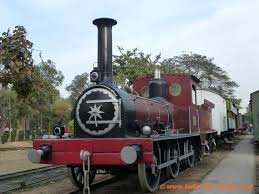
Henry Leese drives a 1952 British Rail Ivatt number 46512 at Strathspey Steam Railway, in Aviemore,Scotland. This year marks the 150th anniversary of the Highland Main Line
The Main Line was built as a transportation link to the South for lairds and landowners living in northern Scotland
A 1952 British Rail Ivatt number 46512 is prepared in the engine shed at Strathspey Steam Railway
The first part of the line opened in June 1, 1863, from the south as far as Pitlochry. On September 9, 1863, trains were able to link Perth and Inverness
The line – built for a total cost of just £919,204 – has since weathered war, the rise of road travel, and the nationalisation of the railways, and now the Strathspey Railway operates part of the original route over Dava Moor.
A series of celebratory events have been taking place over the course of the year to mark the anniversary – with the latest held at Strathspey Steam Railway in Aviemore,Scotland.
Families were invited to step back in time aboard a 1952 British Rail Ivatt locomotive number 46512, which run along part of the original track and watch as engineers prepared a steam engine in one of the last remaining former Highland Railway Company sheds.
Originally, it was local landowners who promoted the construction of a railway from Perth to Inverness, via Aviemore, Grantown and Forres.
Fireman Ken Plant looks from the plate of the 1952 British Rail Ivatt number 46512
Guard Brian Burgess waves off the 1952 British Rail Ivatt number 46512. The line – built for a total cost of just £919,204 – has since weathered war, the rise of road travel, and the nationalisation of the railways
A series of celebratory events have been taking place over the course of the year to mark the anniversary – with the latest held at Strathspey Steam Railway in Aviemore, Scotland
Families were invited to step back in time aboard a 1952 British Rail Ivatt locomotive number 46512, which run along part of the original track and watch as engineers prepared a steam engine in one of the last remaining former Highland Railway Company sheds
Refusing to listening to worried naysayers, who were convinced that a railway could not be made across the high and desolate Druimuachdar Pass, Joseph Mitchell persisted.
Local communities were already seeing the advantages that railways could bring. In 1855 a line of 15 miles had been made as the Inverness & Nairn Railway, and soon links eastward to Forres, Elgin and Keith gave access to Aberdeen.
Then, on 22 July 1861 an Act of Parliament for the Inverness & Perth Junction Railway was obtained and on 17 October that year the first sod was ceremoniously cut at Forres.
The brain child of Joseph Mitchell of Inverness, the link was built to provide direct access through the Grampian Mountains from the Highlands to the rest of Britain for Scotland’s rich lairds and landowners
At the time, the notion of a train line running through the rough and desolate Scottish Highlands was dismissed as mere fancy – a dangerous pipe dream. But 150 years it is still going strong
Queen Victoria was one of the first people from England to use the Inverness and Perth Line. On 15 September 1863 she travelled from Perth to Blair Atholl and back again, breaking her journey to Balmoral from Windsor to visit her fatally ill husband
Within just two years and at a total cost of a mere £919,204, the 104 mile long line was completed.
The Inverness & Perth Junction Railway became part of the Highland Railway in 1865, which was in existence for almost 60 years.
Then in 1923 it was absorbed into the London, Midland & Scottish Railway (LMS), and in 1948 British Railways took over at nationalisation.
Queen Victoria was one of the first people from England to use the Inverness and Perth Line, to visit her fatally ill husband.
On 15 September 1863 she travelled from Perth to Blair Atholl and back again, breaking her journey to Balmoral from Windsor.
Rebecca Cameron works in the buffet car of the restored steam engine
स्टीम
The engine is prepared is prepared in the engine shed at Strathspey Steam Railway – one of just two left in existence
